
Ctenolepisma lineatum
(Fabricius, 1775)
Four-lined Silverfish
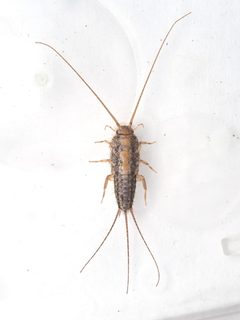
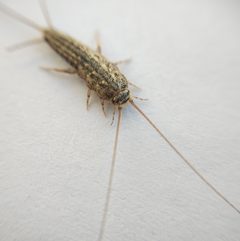
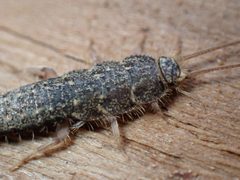
Ctenolepisma lineatum, commonly called the four-lined silverfish, is a of silverfish in the order Zygentoma and Lepismatidae. It is distinguished from the common silverfish (Lepisma saccharina) by a stouter, less shiny body and noticeably longer and caudal filaments. The typically bears dark brown longitudinal lines, giving rise to its . Native to southern Europe, it has spread globally through human commerce and is now found in most temperate and tropical regions except polar and cooler temperate areas. It inhabits both indoor and outdoor environments and is considered a nuisance pest in buildings.
Pronunciation
How to pronounce Ctenolepisma lineatum: //ˌktiːnoʊˈlɛpɪsmə lɪˈniːətəm//
These audio files are automatically generated. While they are not always 100% accurate, they are a good starting point.
Identification
Distinguished from Lepisma saccharina (common silverfish) by its stouter, less shiny body and proportionally longer appendages. The dark brown lines on the are often visible and provide a quick diagnostic feature, though these may be faint or absent in some individuals. Distinguished from Thermobia domestica (firebrat) by preference—C. lineatum tolerates a wider range of humidity conditions and is found both indoors and outdoors, whereas firebrats prefer consistently warm, dry environments. Distinguished from Ctenolepisma longicaudata by body proportions and line patterns. Specimens with broken caudal filaments may be confused with other silverfish ; intact specimens with all three filaments present are more readily identified.
Images
Appearance
Body stouter and less shiny than Lepisma saccharina. and three caudal filaments (the two lateral and caudal filament) are noticeably longer relative to body size. often marked with dark brown longitudinal lines. Body covered in short hairs and that create a slippery texture. Length ranges 8–15 mm excluding appendages. Coloration generally duller than the common silverfish.
Habitat
Found in both indoor and outdoor environments. Indoors, occupies nooks, crevices, and undisturbed areas with moderate humidity. Outdoors, occurs in ground litter, under stones, bark, and other sheltered microhabitats. Tolerates a broader range of humidity conditions than the firebrat, though generally prefers more humid situations than that . Not restricted to artificially heated environments.
Distribution
Native to southern Europe. Introduced globally through human commerce and now established throughout most of the world except polar regions and cooler temperate zones such as the British Isles. Present in North America, including the United States and Canada, as well as other continents with suitable climates.
Seasonality
Active year-round in suitable environments. Being a household pest in temperate regions, and stages may be encountered in any season. No specific seasonal pattern documented; continuous breeding likely in favorable indoor conditions.
Diet
Feeds on , with particular preference for starchy materials. Known to consume bookbinding paste, wallpaper paste, starch in clothing (especially silk and rayon), oatmeal, damp wheat flour, cereals, and other stored organic materials. Scavenges opportunistically on various debris.
Life Cycle
Undergoes (ametabolous development). Young resemble but are smaller and not sexually mature. repeatedly throughout life—laboratory specimens have been observed molting over 40 times during a lifespan of at least 2.5 years. Adults continue to molt after reaching sexual maturity. laid singly or in small batches in cracks and crevices. Sperm transfer via deposited by males; males spin silk strands from mouthpart glands to loosely restrain females during sperm transfer. Lifespan at least 2 years under laboratory conditions.
Behavior
, hiding in crevices during daylight hours. Capable of rapid running when startled, nearly as fast as . Molting continues throughout life, possibly to replace lost during movement through tight spaces or encounters. Males deposit and use silk to loosely bind females during mating.
Ecological Role
Scavenger that contributes to decomposition of starchy organic materials. Serves as prey for various including house centipedes and spiders. Part of the anthropogenic in human dwellings.
Human Relevance
Considered a nuisance pest in homes, libraries, warehouses, and storage facilities. Damage to books, wallpaper, clothing, and stored food products can occur, though rarely reach levels causing significant economic impact. Control methods include reducing humidity, removing food sources, and chemical treatments when necessary.
Similar Taxa
- Lepisma saccharinaCommon silverfish has shinier, more slender body with proportionally shorter and caudal filaments; lacks distinct dark abdominal lines
- Thermobia domesticaFirebrat prefers hot, dry environments such as around furnaces and heating pipes; has more uniform coloration without distinct abdominal lines
- Ctenolepisma longicaudataDistinguished by body proportions and abdominal line patterns; often requires microscopic examination for definitive separation
More Details
Taxonomic Uncertainty
Recent studies in Europe suggest that Ctenolepisma lineatum as currently defined may represent a complex of cryptic . Geographical variation has been documented, and one form from southeastern Spain has already been described as a separate species, Ctenolepisma almeriense. Further taxonomic revision of the group is likely.