
Pycnopsyche gentilis
(McLachlan, 1871)
caddisfly
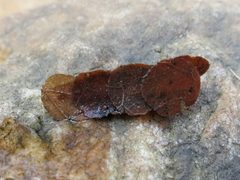
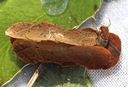
Pycnopsyche gentilis is a northern caddisfly in the Limnephilidae. Larvae are that inhabit allochthonous organic materials in freshwater streams, where they feed on leaf litter colonized by aquatic fungi. The is contemporaneous with congeneric P. luculenta, though larvae differ in case materials and preferences. males exhibit temporal partitioning of activity, with distinct peak arrival times at light sources when active on the same night as .
Pronunciation
How to pronounce Pycnopsyche gentilis: //ˌpɪknəˈsaɪki ˈdʒɛntɪlɪs//
These audio files are automatically generated. While they are not always 100% accurate, they are a good starting point.
Identification
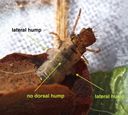
Larvae similar in size to P. luculenta but differ in case materials and preferences; specific diagnostic features for identification are not documented in available sources.
Images
Habitat
Freshwater streams; larvae inhabit allochthonous organic materials and show distinct preferences from congeneric P. luculenta.
Distribution
North America; specifically recorded from West Creek in study literature, with broader Nearctic distribution indicated in databases.
Diet
Leaf litter (functional feeding group: ); fungal contributes significantly to larval growth, with third instar larvae deriving 100% of daily growth from fungal carbon and fifth instar larvae deriving 50%.
Life Cycle
Larvae undergo multiple instars (at least five instars documented); growth rates vary by instar (0.061 day⁻¹ for third instar, 0.034 day⁻¹ for fifth instar on fungal-colonized leaves); contemporaneous with P. luculenta in timing.
Behavior
males exhibit temporal partitioning of activity, arriving at light sources at different peak times than when active on the same night; larvae display shredding on leaf litter.
Ecological Role
in stream ; facilitates leaf litter decomposition and nutrient cycling; fungal- interactions represent an important link in aquatic .
Similar Taxa
- Pycnopsyche luculentaContemporaneous with overlapping larval timing but differs in case materials and preferences; males show different peak activity times at light sources.
- Pycnopsyche scabripennis with rapid growth and early / that diminishes interspecific larval interactions; much rarer than P. gentilis.
Sources and further reading
- BugGuide
- Wikipedia
- GBIF taxonomy match
- iNaturalist taxon
- NCBI Taxonomy
- Catalogue of Life
- Bug Eric: Beetle Bonanza
- Belostomatidae | Beetles In The Bush
- Contribution of fungal biomass to the growth of the shredder, Pycnopsyche gentilis (Trichoptera: Limnephilidae)
- TEMPORAL PATTERNS IN LIFE HISTORY AND FLIGHT BEHAVIOUR OF PYCNOPSYCHE GENTILIS, P. LUCULENTA, AND P. SCABRIPENNIS (TRICHOPTERA: LIMNEPHILIDAE)