
Mystacides sepulchralis
(Walker, 1852)
black dancer, Black Dancer Caddisfly
Mystacides sepulchralis, commonly known as the black dancer, is a of long-horned caddisfly in the Leptoceridae. It is one of three Mystacides species found in North America, alongside M. alafimbriata and M. longicornis. The species has been the subject of taxonomic study due to difficulties in identification, particularly of larval and pupal stages.
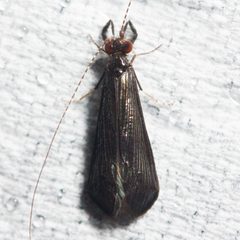
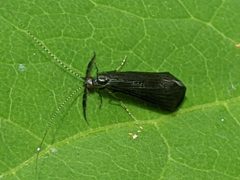
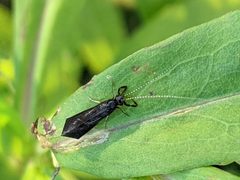
Pronunciation
How to pronounce Mystacides sepulchralis: //mɪsˈtæ.sɪˌdiːz sɛˌpʌlˈkræ.lɪs//
These audio files are automatically generated. While they are not always 100% accurate, they are a good starting point.
Identification
can be distinguished from other North American Mystacides using morphological characters detailed in comparative taxonomic studies. Larval identification has historically been problematic due to variation, requiring updated keys for accurate determination.
Images
Distribution
North America; specifically recorded from Vermont and other locations across the continent. The has a widespread distribution within the Nearctic region.
Life Cycle
Development includes larval and pupal stages preceding the form. Larval stage has shown considerable variation, contributing to past identification difficulties.
Similar Taxa
- Mystacides alafimbriataCo-occurs in North America; distinguished by morphological characters in , larvae, and pupae
- Mystacides longicornisCo-occurs in North America; distinguished by morphological characters in , larvae, and pupae
More Details
Taxonomic History
Originally described as Leptocerus sepulchralis by Walker in 1852, later transferred to Mystacides. A 1964 comparative study in Canadian Journal of Zoology clarified previously misinterpreted diagnostic characters for this and its .
Sources and further reading
- BugGuide
- Wikipedia
- GBIF taxonomy match
- iNaturalist taxon
- NCBI Taxonomy
- Catalogue of Life
- Season Finale | Beetles In The Bush
- Ascalaphidae | Beetles In The Bush
- August | 2022 | Beetles In The Bush
- Party on a pin oak | Beetles In The Bush
- A COMPARATIVE STUDY OF THE NORTH AMERICAN SPECIES IN THE CADDISFLY GENUS MYSTACIDES (TRICHOPTERA: LEPTOCERIDAE)