
Ceraclea
Stephens, 1829
long-horned caddisfly
Species Guides
8- Ceraclea cancellata
- Ceraclea enodis
- Ceraclea maculata(long-horned caddisfly)
- Ceraclea punctata
- Ceraclea resurgens(long-horned caddisfly)
- Ceraclea slossonae(long-horned caddisfly)
- Ceraclea tarsipunctata
- Ceraclea transversa(long-horned caddisfly)
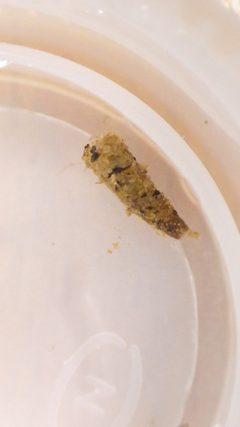
Ceraclea is a of long-horned caddisflies ( Leptoceridae) containing over 140 described . Larvae are aquatic and construct portable cases using silk and various materials. Multiple species have been documented as freshwater sponge , though feeding habits vary including detritivory. range from to more complex multi-cohort patterns with variable strategies.
Pronunciation
How to pronounce Ceraclea: //sɛˈræklɪə//
These audio files are automatically generated. While they are not always 100% accurate, they are a good starting point.
Identification
typically very long, often exceeding body length (characteristic of Leptoceridae). distinguished from other leptocerid by genitalic structures and wing venation patterns. Larvae identified by case construction materials and : some build sand cases, others secrete silk-dominated cases. Specific identification requires examination of adult genitalia or larval capsule .
Images
Habitat
Freshwater streams and rivers; benthic including riffles, pools, and vegetated areas such as waterwillow beds. Larvae associated with substrates ranging from sand to larger particles, with some specifically tied to freshwater sponge colonies.
Distribution
Widespread in the Holarctic; documented in North America (eastern and western regions), Europe (including Scandinavia), and Asia. Specific distribution varies by .
Seasonality
timing varies by and cohort. Some species exhibit brief spring emergence periods; others show extended or bimodal emergence patterns with summer emergence for second cohorts.
Diet
Variable: includes detritus-feeding, freshwater sponge , and mixed feeding strategies. Ceraclea transversa larvae feed entirely on freshwater sponge in early cohorts, switching to detritus in later cohorts. C. ancylus is primarily detritivorous. C. nigronervosa feeds on Spongilla lacustris during at least the last four larval instars.
Host Associations
- freshwater sponges (Porifera) - larval food sourceSpecific to sponge-feeding including C. transversa and C. nigronervosa
Life Cycle
Typically five larval instars. Development patterns include: (1) single-cohort cycles with brief ; (2) two-cohort systems requiring two years, with first cohort as inactive and emerging the following spring, second cohort overwintering as active larvae and emerging later in summer. occurs in constructed cases.
Behavior
Larvae construct portable cases using mass matrix, silk, and environmental materials (sand or detritus). Case construction initiated early in development. Some exhibit feeding cycles. activity patterns and sex ratios depart from typical caddisfly generalizations.
Ecological Role
Functions as independent functional units in stream rather than operating as congeneric functional units. Links benthic resources (detritus, sponge ) to higher . Production estimates vary by type, with higher productivity in riffle habitats compared to pools or vegetated areas.
Similar Taxa
- AthripsodesFormerly included now placed in Ceraclea; historical taxonomic confusion requires careful examination of genitalic and case construction differences
- other Leptoceridae generaDistinguished by Ceraclea's specific case materials, larval patterns, and genitalic structures; many leptocerids share long requiring detailed morphological examination
Sources and further reading
- BugGuide
- Wikipedia
- GBIF taxonomy match
- iNaturalist taxon
- NCBI Taxonomy
- Catalogue of Life
- LIFE HISTORIES OF COEXISTING SPECIES OFCERACLEACADDISFLIES (TRICHOPTERA: LEPTOCERIDAE): THE OPERATION OF INDEPENDENT FUNCTIONAL UNITS IN A STREAM ECOSYSTEM
- The Biology and Immature Stages of the Caddisfly Genus Ceraclea in Eastern North America (Trichoptera: Leptoceridae)1
- Larval and pupal description, life cycle, and adult flight behaviour of the sponge-feeding caddisfly, Ceraclea nigronervosa (Retzius), in Central Norway (Trichoptera)
- Habitat and substrate influences on population and production dynamics of a stream caddisfly, Ceraclea ancylus (Leptoceridae)
- The genome sequence of a cased caddisfly, Ceraclea dissimilis (Stephens, 1836).