
Hydropsyche rossi
Flint, Voshell & Parker, 1979
netspinning caddisfly
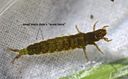
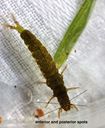
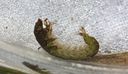
Hydropsyche rossi is a of netspinning in the Hydropsychidae, described by Flint, Voshell & Parker in 1979. It is found in North America within the Nearctic region. As a member of the Hydropsyche, it belongs to a group of caddisflies known for constructing fixed retreats and capture nets to filter food from flowing water.
Pronunciation
How to pronounce Hydropsyche rossi: /haɪˈdrɒpsɪki ˈrɒsi/
These audio files are automatically generated. While they are not always 100% accurate, they are a good starting point.
Images
Habitat
As a netspinning , Hydropsyche rossi is associated with flowing water environments where larvae construct retreats and capture nets. Members of the Hydropsyche typically inhabit streams and rivers, attaching their silk structures to stable substrates such as rocks or woody debris.
Distribution
North America; specifically recorded from the Nearctic region.
Behavior
Netspinning caddisflies in the Hydropsychidae are known for constructing fixed retreats and fan-shaped capture nets using silk secreted from labial glands. These nets are positioned in flowing water to capture drifting food particles. However, specific behavioral details for H. rossi have not been documented.
Ecological Role
Larvae of Hydropsychidae function as filter-feeders in lotic , processing fine particulate organic matter and serving as prey for fish and other aquatic . They contribute to nutrient cycling and energy transfer in stream .
More Details
Taxonomic Authority
The was formally described by Flint, Voshell & Parker in 1979, establishing its scientific identity within the diverse Hydropsyche.