
Peripsocus
Hagen, 1866
Species Guides
11- Peripsocus alachuae(stout barklouse)
- Peripsocus maculosus(stout barklouse)
- Peripsocus madescens(stout barklouse)
- Peripsocus madidus(stout barklouse)
- Peripsocus milleri
- Peripsocus minimus(stout barklouse)
- Peripsocus pauliani
- Peripsocus potosi
- Peripsocus stagnivagus
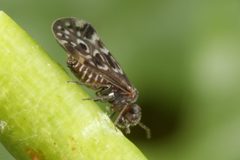
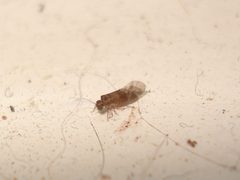
Peripsocus is a of barklice (order Psocodea) comprising over 250 described . Members are characterized by their stout body form compared to other barklice. The genus has a distribution across six continents. Species in this genus are associated with bark and lichen .
Pronunciation
How to pronounce Peripsocus: /ˌpɛrɪpˈsəʊkəs/
These audio files are automatically generated. While they are not always 100% accurate, they are a good starting point.
Identification
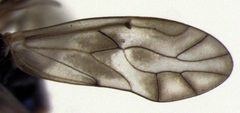
Peripsocus are distinguished from other barklice by their relatively robust, stout body shape. They possess the general features of long , soft bodies, and reduced wing venation when wings are present. Specific species-level identification requires examination of genitalia and wing venation patterns.
Images
Habitat
in this inhabit bark surfaces and are frequently associated with lichen growth on trees. They occupy temperate and tropical forest environments where suitable microhabitats exist on woody vegetation.
Distribution
distribution including North America (Canada, USA, Mexico), Central America (Panama), South America (Brazil, Chile, Venezuela), Europe (Finland, Germany, Great Britain, Luxembourg, Norway, Sweden, Denmark), Africa (Morocco), Asia (Japan, Indonesia), Oceania (Australia, Norfolk Island), and Pacific islands (French Polynesia, Galapagos).
Ecological Role
Members of this contribute to nutrient cycling in forest through consumption of lichens and associated detritus on bark surfaces. They form part of the inhabiting the bark microhabitat.
Human Relevance
No direct economic or medical significance has been documented for this . They are not known to be household pests.
Similar Taxa
- Other Peripsocidae generaPeripsocus can be distinguished from related in the same by its stouter body form; other peripsocids tend to be more slender.
- PsocidaeMembers of Psocidae, another of barklice, generally have more slender bodies and different wing venation patterns compared to the robust Peripsocus.
More Details
Species diversity
The contains more than 250 described , indicating substantial taxonomic diversity within Peripsocus.
Taxonomic history
The was established by Hagen in 1866 and has remained a stable grouping within the Peripsocidae.