
Megaphasma
Caudell, 1903
giant walkingstick
Species Guides
1- Megaphasma denticrus(Giant Walkingstick)
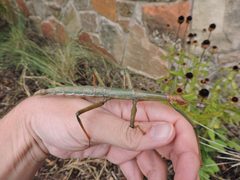
Megaphasma is a of giant walkingsticks in the Diapheromeridae, containing at least two described . The genus includes Megaphasma denticrus, recognized as the longest insect species in North America, with females reaching 150+ mm in body length. Members of this genus are characterized by their exceptional size, cryptic stick-like appearance, and distinctive morphological features including toothed mesofemora. The genus is primarily distributed in the south-central United States.
Pronunciation
How to pronounce Megaphasma: /ˌmɛɡəˈfæzmə/
These audio files are automatically generated. While they are not always 100% accurate, they are a good starting point.
Images
Distribution
Primarily distributed in the south-central United States, especially Texas. Records extend north and east to Iowa, Wisconsin, Indiana, Missouri, Arkansas, Illinois, and Alabama. Also reported from Mexico.
Host Associations
- Quercus spp. - presumed forest in Ozark
- grass - recorded
- oak - recorded
- grape - recorded
- mesquite - recorded
Similar Taxa
- Diapheromera femoratanorthern walkingstick; smaller size, lacks toothed mesofemora characteristic of Megaphasma
More Details
Etymology
name derived from Greek 'mega' (large) and 'phasma' (apparition, ghost), meaning 'giant walkingstick'. Specific epithet of M. denticrus from Latin 'den' (tooth) and 'crus' (leg), referring to the toothed underside of the mesofemur.
Taxonomic note
Formerly classified in order Orthoptera with grasshoppers; now placed in . The spelling 'dentricus' for M. denticrus is a common misspelling; the correct 'denticrus' is etymologically derived from Latin roots.
Size record
Megaphasma denticrus holds the record as the longest insect in North America. Total length with outstretched legs can exceed 8 inches (200+ mm). Related species from Borneo reach more than 18 inches.