
Tropidischiinae
Scudder, 1897
Genus Guides
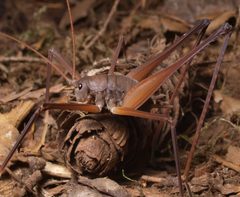
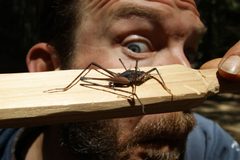
1Tropidischiinae is a of camel crickets within the Rhaphidophoridae, first described by Scudder in 1897. Members of this subfamily are wingless orthopterans adapted to cool, moist environments. The subfamily includes such as Tropidischia and Daihinibaenetes. Tropidischiinae are primarily distributed in western North America, with many associated with montane and cave .
Pronunciation
How to pronounce Tropidischiinae: //ˌtrɒpɪˈdɪski.aɪniː//
These audio files are automatically generated. While they are not always 100% accurate, they are a good starting point.
Identification
Tropidischiinae can be distinguished from other Rhaphidophoridae by combinations of characters including body proportions and genitalic . Unlike the more widespread subfamily Rhaphidophorinae, Tropidischiinae often show reduced size and elongated appendages associated with subterranean or crevice-dwelling habits. Definitive identification requires examination of male genitalia and comparison with .
Images
Habitat
in this inhabit cool, moist microhabitats including caves, talus slopes, and forest litter in montane regions. Many species show strong association with limestone karst formations or rocky substrates that provide stable humidity and temperature refugia.
Distribution
Western North America, ranging from southwestern Canada through the western United States to northern Mexico. Center of diversity in the Rocky Mountains, Sierra Nevada, and associated ranges. Some have highly restricted ranges associated with specific cave systems or mountain ranges.
Similar Taxa
- RhaphidophorinaeThe other major of Rhaphidophoridae; Tropidischiinae differs in genitalic structure and often shows more pronounced troglomorphic adaptations in cave-dwelling
- DolichopodainaeAnother Rhaphidophoridae ; Tropidischiinae is distinguished by different arrangements of spines on the hind tibiae and male genitalia
More Details
Taxonomic history
Tropidischiinae was established by Scudder in 1897 but has undergone significant revision. Modern phylogenetic studies using molecular data have helped clarify relationships within Rhaphidophoridae, though some generic boundaries within Tropidischiinae remain under investigation.