
Anostostomatidae
Saussure, 1859
wētā, king crickets
Genus Guides
1- Cnemotettix(Silk-spinning Crickets)
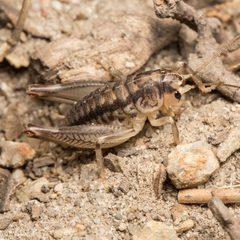
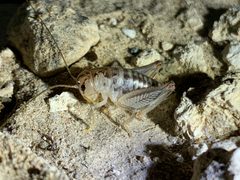
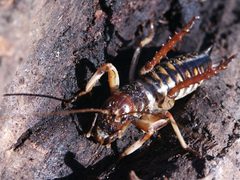
is a of large, orthopterans in the superfamily , distributed across the southern hemisphere in South Africa, Australia, New Zealand, and parts of the Americas. Members are commonly known as king crickets in Australia and South Africa, and wētā in New Zealand. The family exhibits considerable size variation, with some exceeding 8 cm in length. Many species are flightless, though winged forms occur in some Australian and Asian . The family is notable for diverse feeding strategies including herbivory, scavenging, , and specialized fungal feeding.
Pronunciation
How to pronounce Anostostomatidae: /ænɒstoʊstɒmətɪdiː/
These audio files are automatically generated. While they are not always 100% accurate, they are a good starting point.
Identification
Distinguished from related Stenopelmatidae (Jerusalem crickets) and Rhaphidophoridae (cave crickets) by combination of: southern hemisphere distribution (vs. primarily northern hemisphere for Stenopelmatidae); presence of tympanal hearing organs in most (absent in Rhaphidophoridae); and specific tibial spine arrangements. From Gryllacrididae (raspy crickets) by generally more robust body form and different stridulatory mechanisms. From Tettigoniidae (katydids) by shorter, stouter hind legs and typically habit with reduced wings. Male modifications, when present, are -specific and useful for identification. Foretibial spine count (one vs. two) separates some South African genera.
Images
Habitat
Diverse across southern hemisphere landmasses. Australian king crickets occupy varied habitats including forests and streamsides. New Zealand wētā include: giant wētā in native bush and scrub; tree wētā (Hemideina) in arboreal habitats, utilizing tree holes and cavities; ground wētā (Hemiandrus) in forest leaf litter and burrows. Some show specific microhabitat associations: Transaevum nymphs inhabit streamsides and enter water when disturbed; Exogryllacris feeds on fungal fruiting bodies on fallen logs. Lesser Antilles species restricted to well-preserved rainforests, with elevation varying by island position. The Mahoenui giant wētā has uniquely exploited dense gorse (Ulex europaeus) thickets as from .
Distribution
Southern hemisphere distribution reflecting Gondwanan heritage: South Africa (including Parktown prawn and diverse fauna); Australia (widespread king crickets including winged and wingless forms); New Zealand (diverse wētā fauna including giant wētā, tree wētā, ground wētā, and tusked wētā); Central and South America (Mexico, Guatemala, Colombia, Brazil, Lesser Antilles); Asia (China, Japan, Taiwan, India). Some Japanese island suggest possible capabilities or more complex biogeographic history than simple vicariance.
Seasonality
activity pattern consistent across ; individuals become active shortly after sunset. Long with extended development: development up to 18 months, nymphal stages lasting 1-3 years with 7-10 instars, and longevity of one year or more. Adults present year-round in many , with activity influenced by temperature—movement distances increase significantly above 13.5°C in at least one studied species. Breeding and egg-laying varies by species and climate.
Diet
Highly variable across and . New Zealand tree wētā (Hemideina) primarily herbivorous, feeding on leaves, fruit, and flowers, with occasional scavenging of carcasses. Ground wētā Anderus maculifrons predatory on forest invertebrates. Australian king crickets include: generalized scavengers consuming dead and decaying matter; specialized fungal feeders (Exogryllacris feeding on fungal fruiting bodies on fallen trees); and active —one documented case of preying on funnel-web spiders. Some South African species likely or predatory given mandibular .
Life Cycle
Hemimetabolous development with three stages: , nymph, and . Extended characteristic: egg development period up to 18 months; nymphal development spanning 1-3 years with 7-10 ; adult lifespan exceeding one year in many . Females of some species construct isolated chambers for egg and early nymph care. Ovipositor varies: long and sword-like in some ground-dwelling species, reduced in others. Maternal care, where present, involves guarding eggs and young nymphs in excavated chambers.
Behavior
Strictly , emerging shortly after sunset. Communication via substrate-borne vibrations and airborne sound produced through stridulation; both sexes and nymphs capable of sound production. Diverse antipredator defenses: retreat to burrows or dense vegetation; jumping escape; stridulatory warning; ejection of foul-smelling ; biting; in winged ; and aquatic escape (Transaevum nymphs jumping into water). Male-male combat ritualized in some species, involving visual displays, antennal fencing, kicking, and grappling; tusked wētā (Motuweta) use enlarged mandibular tusks as weapons with reduced injury rates compared to less ritualized fighters. Giant wētā use dorso- tremulation in agonistic encounters; ground wētā drum on plant substrates for pair formation.
Ecological Role
Significant components of southern hemisphere . Herbivorous contribute to leaf litter processing and nutrient cycling. Predatory and scavenging species participate in detrital and invertebrate . Tree wētā serve as cavity-users in forest ecosystems, potentially influencing decomposition processes in tree holes. Prey for diverse vertebrate including birds, reptiles, and mammals; in New Zealand, introduced mammalian predators (rats, mice, possums, hedgehogs, cats) have severely impacted , contributing to declines and extirpations. Some species function as ecological indicators of intactness, particularly in forest systems.
Human Relevance
Cultural significance in New Zealand, where wētā are iconic native fauna and conservation flagships; giant wētā in particular receive substantial conservation attention and legal protection. Mahoenui giant wētā conservation involves management of gorse —a novel supporting the only mainland lowland . In South Africa, the Parktown prawn is a well-known suburban , notable for entering swimming pools and houses. Some large species kept in captivity by entomology enthusiasts. No significant agricultural pest status, though occasional localized damage to garden plants by herbivorous species. Subject of extensive scientific research on evolution, , communication, and conservation .
Similar Taxa
- StenopelmatidaeJerusalem crickets share robust body form and habits, but are primarily northern hemisphere in distribution and lack the tympanal hearing organs present in most .
- RhaphidophoridaeCave crickets are similarly flightless and with long , but lack tympanal organs entirely, have more slender bodies, and are typically associated with caves and subterranean .
- GryllacrididaeRaspy crickets overlap in some and share Ensifera relationships, but possess different stridulatory apparatus, silk-producing capabilities, and generally more slender body plans.
Misconceptions
Not all insects called 'wētā' in New Zealand belong to this —cave wētā belong to Rhaphidophoridae. The 'Parktown prawn' name misleadingly suggests crustacean affinities. South African 'armoured ground crickets' (family Tettigoniidae, Hetrodinae) are frequently confused with king crickets but are unrelated. The family's Gondwanan distribution has been interpreted as purely vicariant, but evidence for Oligocene submergence of New Zealand and presence on some Japanese islands suggests more complex biogeographic history involving or recent in some regions.
More Details
Conservation Status
Multiple threatened or endangered, particularly giant wētā (Deinacrida) in New Zealand, where introduced have caused severe declines. loss and threaten species with specific microhabitat requirements.
Acoustic Communication Diversity
exhibits remarkable diversity in signaling modalities: tremulation (substrate vibration without sound), drumming (abdominal impact on substrates), and stridulation (friction-based sound). Sensory organs for vibration detection conserved across regardless of tympanal presence, indicating deep evolutionary roots of .
Taxonomic Instability
has undergone repeated reclassification, previously placed in Stenopelmatidae or treated as Mimnermidae/Henicidae. Current structure (Anostostomatinae, Deinacridinae, Lutosinae, Anabropsinae, etc.) reflects ongoing revision with molecular and morphological data.
Sources and further reading
- BugGuide
- Wikipedia
- GBIF taxonomy match
- iNaturalist taxon
- NCBI Taxonomy
- Catalogue of Life
- Tuesday Teaser | Beetles In The Bush
- The Origin of Grasshoppers, Katydids, and Crickets: A New Study Resolves the Evolutionary Tree of the Orthoptera
- ID Challenge #2 | Beetles In The Bush
- Repertoire of male-male agonistic behaviour in tusked weta (Motuweta ripariaGibbs) (Orthoptera: Anostostomatidae) compared to tree weta (HemideinaWalker) (Orthoptera: Anostostomatidae)
- Vibrational Behaviour and Communication in the New Zealand Weta (Orthoptera: Anostostomatidae)
- Australian king crickets: distribution, habitats and biology (Orthoptera: Anostostomatidae).
- Survival, predation, and behaviour of the Mahoenui giant wētā ('Deinacrida mahoenui': Anostostomatidae: Orthoptera)
- Two new species of Hemiandrus (Orthoptera: Anostostomatidae) from Fiordland National Park, New Zealand
- A new apterous species of Chevron Crickets Anabropsis Rehn, 1901 from Yunnan, China (Orthoptera: Anostostomatidae: Anabropsini)
- A new species of large Hemiandrus ground wētā (Orthoptera: Anostostomatidae) from North Island, New Zealand
- New species and taxonomic rearrangements of Anostostomatid Crickets (Orthoptera: Stenopelmatoidea: Anostostomatidae) from the Neotropics
- New species of Tintiyakus Cadena-Castañeda (Orthoptera: Anostostomatidae: Lutosinae) from the Brazilian Mountain Amazon Rainforest
- A new genus and five new species of Anostostomatidae from the Lesser Antilles (Orthoptera: Ensifera)
- Review of Glaphyrosoma (Orthoptera: Stenopelmatoidea: Anostostomatidae), including new species and biological information
- Studies in Guatemalan Ensifera: New Glaphyrosoma species (Orthoptera: Anostostomatidae) and additional data for other described species
- Redescription of Libanasa brachyura Karny, 1928. (Orthoptera: Anostostomatidae: ?Lutosinae) from Tanzania and problems at the subfamily level
- Macropterous species of genus Melanabropsis Wang & Liu, 2020 (Orthoptera: Anostostomatidae: Anabropsini) from the localities predicted in a previous study
- The reproductive biology and the eggs of New Zealand Anostostomatidae.
- Comparative Analysis of the Mitochondrial Genomes of Five Species of Anabropsis (Orthoptera: Anostostomatidae) and the Phylogenetic Implications of Anostostomatidae.
- Complete mitochondrial genome of Melanabropsis tianmuica (Anabropsinae: Anostostomatidae) from China.