
Neocurtilla
Kirby, 1906
northern mole crickets
Species Guides
1- Neocurtilla hexadactyla(Northern Mole Cricket)
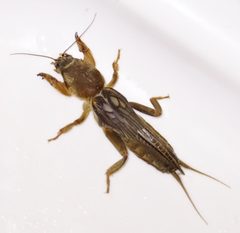
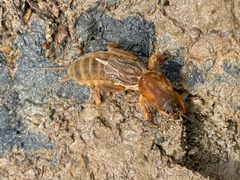
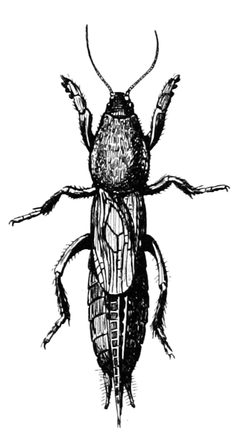
Neocurtilla is a of mole crickets in the Gryllotalpidae, comprising approximately seven described distributed primarily in North, Central, and South America. Species within this genus are insects adapted for burrowing, with enlarged forelegs modified for digging. The genus includes notable species such as Neocurtilla hexadactyla, commonly known as the northern mole cricket, which has been studied for its unique segregation mechanisms. Members of this genus are of interest in agricultural contexts due to their potential as pests and their associations with natural .
Pronunciation
How to pronounce Neocurtilla: /niː.oʊˈkɜːrtɪlə/
These audio files are automatically generated. While they are not always 100% accurate, they are a good starting point.
Identification
Neocurtilla can be distinguished from the related by differences in collection technique efficacy; Neocurtilla species respond differently to sound, light, and pitfall traps compared to Scapteriscus species in field studies conducted in Brazil. The genus is characterized by the typical body plan with forelegs, though specific diagnostic morphological features distinguishing Neocurtilla from other gryllotalpid genera are not detailed in available sources.
Images
Habitat
in this have been collected from grasslands in Buenos Aires State, Argentina, and from agricultural areas in São Paulo State, Brazil. Neocurtilla hexadactyla has been documented utilizing Carolina-bay , which are shallow, elliptical depressions in the southeastern United States characterized by seasonal flooding and distinctive vegetation.
Distribution
Neocurtilla are found primarily in North, Central, and South America. Documented occurrences include Brazil, northeastern and northwestern Argentina, and the United States (Alabama, Arkansas). The has a broad New World distribution spanning temperate and tropical regions.
Behavior
Neocurtilla exhibit species-specific behavioral responses to collection methods. Field studies in Brazil demonstrated significant differences among species in susceptibility to manual excavation versus trapping with sound, light, or pitfall traps. These behavioral differences affect the assessment of natural mortality factors from , as frequencies vary significantly with collection technique.
Human Relevance
Neocurtilla claraziana has been identified as an agricultural pest in Argentina, where nymphs and are targeted in field surveys for pest management. Members of this serve as for parasitic including Gryllophila skrjabini and Cephalobellus magalhaesi, which have been studied as potential agents. The evaluation of natural for biocontrol purposes requires careful consideration of -specific that affect collection and mortality assessment.
Similar Taxa
- ScapteriscusBoth are in the Gryllotalpidae and occur sympatrically in Brazil, but differ significantly in behavioral responses to collection techniques and in the frequency of natural detected through different sampling methods.
More Details
Chromosome biology
Neocurtilla hexadactyla exhibits a unique system with non-random segregation controlled by chromosomal spindle fibres. Males possess an X1 univalent and an X2Y bivalent; the X1 actively reorients during to ensure proper segregation. This has been extensively studied using ultraviolet microbeam analysis to elucidate the mechanisms of chromosome movement and spindle fibre function.
Parasite records
Neocurtilla claraziana serves as for at least two thelastomatid : Gryllophila skrjabini (reported for the first time in Argentina on this host) and Cephalobellus magalhaesi (only the second isolation of this species worldwide). occurs in both nymphs and collected from grassland using tensio-active solutions.
Sources and further reading
- BugGuide
- Wikipedia
- GBIF taxonomy match
- iNaturalist taxon
- NCBI Taxonomy
- Catalogue of Life
- Life History of the Northern Mole Cricket, Neocurtilla hexadactyla (Orthoptera: Gryllotalpidae), Utilizing Carolina-bay Habitats
- Localized recombination nodules and sex chromosome behavior in the male mole cricket, Neocurtilla hexadactyla
- Non-random chromosome segregation in Neocurtilla hexadactyla is controlled by chromosomal spindle fibres: An ultraviolet microbeam analysis
- First record of Gryllophila skrjabini Sergiev, 1923 and Cephalobellus magalhaesi Schwenk, 1926 (Nematoda: Thelastomatidae) parasites of Neocurtilla claraziana Saussure, 1874 (Orthoptera: Gryllotalpidae) in Argentina
- Field collection techniques for genera Neocurtilla and Scapteriscus mole crickets and their effect upon the evaluation of their natural pathogens in Brazil