
Oxyinae
Brunner von Wattenwyl, 1893
Rice Grasshoppers and Allies
Genus Guides
1- Oxya(Rice Grasshoppers)
Oxyinae is a of grasshoppers in the Acrididae, established by Brunner von Wattenwyl in 1893. The subfamily contains two well-defined tribes, Oxyini and Praxibulini, plus numerous of uncertain tribal affiliation. are distributed across Africa (including Madagascar), Australasia, and parts of Asia. Several species, particularly in the genus Oxya, are significant agricultural pests of rice and other crops.
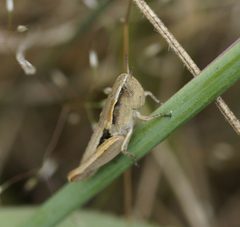
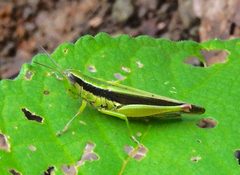
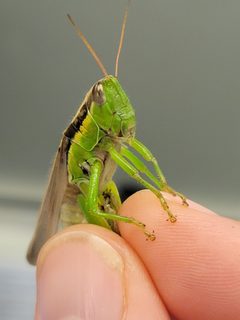
Pronunciation
How to pronounce Oxyinae: /ˈɔk.si.aɪ.niː/
These audio files are automatically generated. While they are not always 100% accurate, they are a good starting point.
Identification
Members of Oxyinae are distinguished from related by specific genitalic and external morphological characters, though precise diagnostic features vary among included tribes. The subfamily Hemiacridinae has been historically confused with Oxyinae and requires careful separation based on male genitalia structure and pronotal shape. Australian Oxyinae display substantial diversification with reduced wings in some lineages.
Images
Habitat
vary widely among constituent and include tropical and subtropical forests, swamps of humid forests, rice fields, grasslands, semi-desert areas, and roadside vegetation. The genus Digentia is specifically associated with swamp habitats in the humid forests of southern Cameroon. Forest-dwelling genera such as Pterotiltus severe habitat destruction threats.
Distribution
Distributed throughout Africa including Madagascar and the Congo Basin, coastal West Africa from Ghana to Uganda, and Australasia. Asian records include Pakistan, India, Southeast Asia, China, Indochina, Japan, Indonesia (Sulawesi), and Papua New Guinea. Australian fauna shows marked endemicity.
Human Relevance
Similar Taxa
- HemiacridinaeHistorically confused with Oxyinae; distinguished by male genitalia structure and pronotal
More Details
Tribal Classification
The comprises two clearly defined tribes: Oxyini (Brunner von Wattenwyl, 1893) distributed across Africa and Asia, and Praxibulini (Rehn, 1957) restricted to Australia. A third tribe, Spathosternini, has been recognized in Australian fauna. Numerous remain of uncertain tribal affiliation.
Taxonomic Instability
The higher classification of Oxyinae has been regarded as inflated, with proposals to downgrade rankings and make greater use of the tribal category. Recent revisions have synonymized (e.g., Paratoacris with Thanmoia) and described numerous new , particularly from undercollected regions such as Cameroon, Equatorial Guinea, and Indonesia.
Conservation Concern
Forest-dwelling such as Pterotiltus are known from very few specimens, often only type series or unique , with urgent need for additional collection due to ongoing rapid destruction in the Congo Basin and West African forests.
Sources and further reading
- BugGuide
- Wikipedia
- iNaturalist taxon
- NCBI Taxonomy
- Catalogue of Life
- Records of some Oxyinae (Orthoptera, Acrididae) from Sindh, Pakistan
- Review of Pterotiltus Karsch, 1893 (Orthoptera, Acrididae, Oxyinae)
- Comparison of Mating Behavior of Four Species of Oxyinae (Acrididae: Orthoptera)
- Review of the African genus Digentia Stål, 1878 (Orthoptera, Acrididae, Oxyinae)
- Two new species of the genus Chitaura Bolívar, 1918 (Orthoptera: Acrididae, Oxyinae) from Sulawesi Island
- A higher classification of the Australian Acridoidea (Orthoptera). I. General introduction and subfamily Oxyinae
- Revision of the genera Thanmoia Ramme, 1941 and Paratoacris Li & Jin, 1984 (Orthoptera: Acrididae: Oxyinae), with a proposal of a new generic synonym and a new combination