
Mestobregma plattei
(Thomas, 1873)
Platte Range Grasshopper
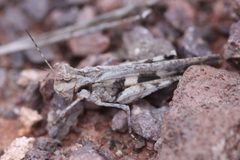
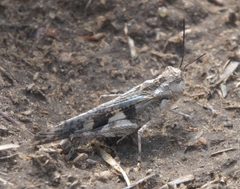
Mestobregma plattei, known as the Platte Range , is a band-winged grasshopper in the Acrididae. It is uncommon in eastern Wyoming and occurs in limited areas throughout the state. The inhabits shortgrass prairie with patches of barren rocky soil. are present in late summer, with collections documented in July and August. Its economic impact is minimal.
Pronunciation
How to pronounce Mestobregma plattei: //ˌmɛstoʊˈbrɛɡmə ˈplætaɪ//
These audio files are automatically generated. While they are not always 100% accurate, they are a good starting point.
Identification
As a member of the Oedipodinae (band-winged grasshoppers), Mestobregma plattei possesses the diagnostic traits of this group: enlarged hind legs adapted for jumping, short , and banded wings. Specific morphological details for distinguishing this from are not documented in available sources.
Images
Habitat
Shortgrass prairie with areas of barren rocky soil. The shows preference for open ground conditions with sparse vegetation cover.
Distribution
Documented from eastern Wyoming with probable occurrence throughout the state in limited areas. GBIF records indicate additional presence in Arizona, New Mexico, Texas, and northeastern Mexico.
Seasonality
collected in late July and August. overwinter in soil. The belongs to the intermediate hatching group, with nymphs hatching in late spring.
Life Cycle
overwinter in the soil. Development proceeds through nymphal stages to adulthood, with present in late summer.
Human Relevance
Not economically damaging in Wyoming. The is considered uncommon and does not contribute significantly to pest .
Similar Taxa
- Metator nevadensisSame Mestobregma; both are uncommon band-winged grasshoppers of the western United States with similar preferences
- Other Oedipodinae speciesShare band-winged grasshopper ; precise differentiation requires examination of pronotal carinae, wing banding patterns, and other fine structural characters
More Details
Taxonomic Note
The specific epithet 'plattei' refers to the Platte River region, indicating the type locality or area of original collection. The was described by Thomas in 1873.
Data Limitations
Detailed biological information for this is sparse. Most knowledge derives from general surveys rather than dedicated studies. Feeding habits, precise requirements, and remain poorly documented.