
Rhammatocerus
Saussure, 1861
Species Guides
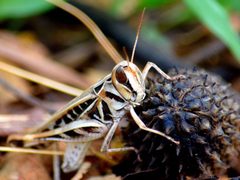
1- Rhammatocerus viatorius(Traveller Grasshopper)
Rhammatocerus is a of grasshoppers in the Acrididae, Gomphocerinae, and tribe Scyllinini. The genus comprises approximately 16 described distributed across South America and the Caribbean. One notable species, R. schistocercoides, is known as the "Mato Grosso locust" and has been documented as an agricultural pest. The genus has been included in molecular phylogenetic studies of Acrididae, contributing to understanding of evolutionary relationships.
Pronunciation
How to pronounce Rhammatocerus: /ræmətoʊˈsɛrəs/
These audio files are automatically generated. While they are not always 100% accurate, they are a good starting point.
Identification
Rhammatocerus are grasshoppers in the Gomphocerinae, tribe Scyllinini. Identification to species level historically relies on examination of male genitalia, a common practice in Acrididae due to of external body forms. The is distinguished from related Gomphocerinae genera through a combination of morphological characters, though specific diagnostic features for the genus as a whole are not well-documented in available sources. Species-level identification requires taxonomic knowledge and examination of specimens.
Images
Habitat
of Rhammatocerus have been recorded from grassland and open vegetation in South America and the Caribbean. The "Mato Grosso locust" (R. schistocercoides) is associated with agricultural and disturbed grassland areas in Brazil.
Distribution
Rhammatocerus occurs in South America and the Caribbean. Documented distribution includes Argentina (northeast and south), Brazil (west-central and northeast), and Caribbean regions. The appears to be primarily Neotropical in distribution.
Human Relevance
, the "Mato Grosso locust," has been documented as an agricultural pest. This has been observed in affecting crops in Brazil. The "locust" suggests potential -dependent phase and swarming , though specific details are not confirmed in available sources.
Similar Taxa
- SchistocercaBoth include commonly called "locusts" and share similar body plans. was named for its resemblance to Schistocerca species. Schistocerca is in a different (Cyrtacanthacridinae) and is not closely related phylogenetically, representing of locust-like .
More Details
Phylogenetic significance
Rhammatocerus pictus was included in the first comprehensive molecular of Acrididae (Song et al., 2018), contributing to evidence that the originated in South America rather than Africa. This study used nuclear and mitochondrial sequences from 142 .
Taxonomic history
The was established by Saussure in 1861. As with many Gomphocerinae genera, Rhammatocerus classification may be affected by ongoing revisions based on molecular phylogenetic data, which have revealed that many traditionally recognized in Acrididae are .