
Dichromorpha
Morse, 1896
Species Guides
3- Dichromorpha elegans(short-winged grasshopper)
- Dichromorpha prominula
- Dichromorpha viridis(Short-winged Green Grasshopper)
Dichromorpha is a of grasshoppers in the Acrididae, Gomphocerinae. The genus contains four recognized : D. australis, D. elegans, D. prominula, and D. viridis. Members of this genus are distributed across the Americas, with records from North America and South America including Argentina and Brazil.
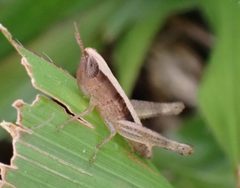
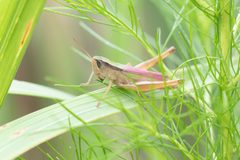

Pronunciation
How to pronounce Dichromorpha: /ˌdaɪ.kroʊˈmɔːr.fə/
These audio files are automatically generated. While they are not always 100% accurate, they are a good starting point.
Identification
The Dichromorpha can be distinguished from related genera in the tribe Orphulellini by features of the male genitalia and pronotal structure. -level identification requires examination of these structures. Dichromorpha viridis has been observed to exhibit environmentally induced color dimorphism, with individuals appearing green or brown.
Images
Habitat
Based on distribution records and associations of the , Dichromorpha inhabit grassland environments. Specific habitat preferences vary by species; Dichromorpha viridis has been associated with grassy areas.
Distribution
Recorded from North America (Alabama, Arkansas) and South America (northeast and southern Argentina, northern Brazil). The has a disjunct transcontinental distribution across the Americas.
Similar Taxa
- ChortophagaBoth belong to the Gomphocerinae and share grassland . Chortophaga such as C. viridifasciata also exhibit color dimorphism (green and brown morphs), similar to what has been documented in Dichromorpha viridis.
- OrphulellaMember of the same tribe Orphulellini with similar body plan and grassland . Differentiation requires examination of male genitalia and pronotal details.
More Details
Color dimorphism
Research by Otte and Williams (1972) documented environmentally induced color dimorphism in Dichromorpha viridis, with individuals capable of expressing green or brown coloration depending on environmental conditions. This parallels similar phenomena in related .
Taxonomic placement
Dichromorpha is classified in the tribe Orphulellini within the Gomphocerinae. This tribe includes several of small to medium-sized grasshoppers characterized by specific features of the male genitalia and pronotal structure.