
Telebasis byersi
Westfall, 1957
Duckweed Firetail
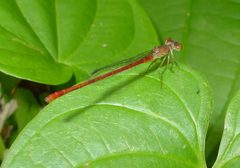
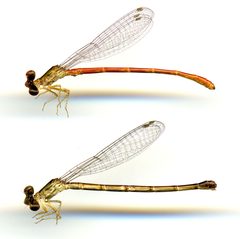
Telebasis byersi, commonly known as the Duckweed Firetail, is a small in the Coenagrionidae. It was described by Westfall in 1957 and is primarily found in the southeastern United States, with its range extending north to Illinois and west to New Mexico. The is characterized by its small size and red coloration. It is part of a that has been subject to taxonomic revision by Rosser Garrison in 2009.
Pronunciation
How to pronounce Telebasis byersi: /ˌtɛlɛˈbeɪsɪs ˈbaɪərsi/
These audio files are automatically generated. While they are not always 100% accurate, they are a good starting point.
Identification
The Duckweed Firetail can be distinguished from other Telebasis by its small size (25–31 mm) and red coloration. The Telebasis was revised taxonomically by Rosser Garrison in 2009, which may provide additional diagnostic characters for species-level identification. Field identification should reference Garrison's revision for definitive characters separating T. byersi from .
Images
Habitat
Associated with aquatic environments; specific microhabitat preferences for this are not documented in the provided sources. As a member of Coenagrionidae, it likely inhabits freshwater systems.
Distribution
Native mainly to the southeastern United States, with distribution extending north to Illinois and west to New Mexico. GBIF records confirm presence in North America.
Similar Taxa
- Other Telebasis species within the same share similar small ; definitive separation requires reference to Garrison's 2009 taxonomic revision of Telebasis
- Other red-colored CoenagrionidaeRed coloration occurs in multiple ; accurate identification requires examination of structural characters and geographic range
More Details
Taxonomic Authority
The was described by Westfall in 1957. The Telebasis was subject to a major taxonomic revision by Rosser Garrison in 2009, which is a key reference for identification and classification of species within this genus.
Observation Data
iNaturalist records 915 observations of this , indicating it is moderately well-documented by citizen scientists, though this does not necessarily reflect its true abundance or distribution.