
Leptobasis
Selys, 1877
swampdamsels
Species Guides
3- Leptobasis lucifer(Lucifer Swampdamsel)
- Leptobasis melinogaster(Cream-tipped Swampdamsel)
- Leptobasis vacillans(Red-tipped Swampdamsel)
Leptobasis is a of in the Coenagrionidae, commonly known as swampdamsels. The genus is neotropical in distribution, with most occurring in Central and South America; one species, L. melinogaster, has been recorded in Texas. The genus has undergone taxonomic revision, with five species transferred to the related genus Tuberculobasis in 2009. Females are distinguished by exceptionally long ovipositors relative to body size.
Pronunciation
How to pronounce Leptobasis: /ˌlɛptoʊˈbeɪsɪs/
These audio files are automatically generated. While they are not always 100% accurate, they are a good starting point.
Identification
Distinguished from other Coenagrionidae by the combination of slender body form and extremely long female ovipositors. Separated from the closely related Denticulobasis and Tuberculobasis by specific thoracic and abdominal characters described in Garrison and von Ellenrieder (2009), including details of and denticle patterns on male appendages. The five transferred to Tuberculobasis (L. cardinalis, L. costalimai, L. inversa, L. mammilaris, L. yanomami) are no longer classified in Leptobasis.
Images
Appearance
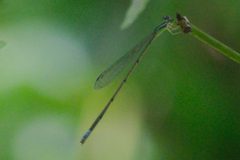
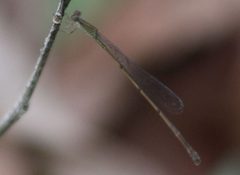
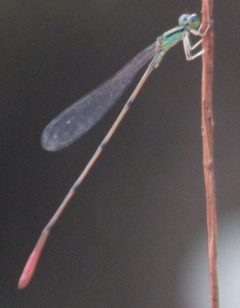
Slender-bodied . Females possess very long ovipositors that extend conspicuously beyond the tip. Coloration varies by ; some have distinctive markings referenced in such as "cream-tipped" and "red-tipped."
Habitat
Associated with swampy or wetland environments, as indicated by the "swampdamsels." Specific microhabitat requirements are poorly documented for most .
Distribution
Neotropical region. Primary range extends through Central and South America. The northernmost record is L. melinogaster in Texas, USA.
Life Cycle
Aquatic larval stage (naiad) followed by terrestrial stage, as in all Odonata. Specific details of development duration or larval are not documented.
Similar Taxa
- TuberculobasisFormerly contained five now placed in Tuberculobasis; distinguished by male appendage and thoracic patterns.
- DenticulobasisClosely related neotropical described in 2009; separated from Leptobasis by specific denticle patterns on male terminal appendages.
More Details
Taxonomic History
The concept for Leptobasis changed substantially in 2009 when Garrison and von Ellenrieder transferred five to the new genus Tuberculobasis. This revision established clearer boundaries between Leptobasis and related genera.