
Argia funebris
(Hagen, 1861)
Springwater Dancer
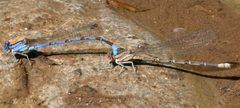
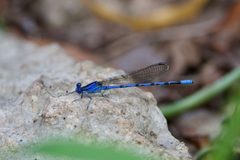
Argia funebris, commonly known as the Springwater Dancer, is a of in the Coenagrionidae. The Argia is speciose and widely distributed in the New World tropics and subtropics. As a member of the suborder Zygoptera, this species exhibits the characteristic slender body and wings folded together over the when at rest. The species has been documented across Middle America and has a global presence according to distribution records. Taxonomic revisions of the genus Argia have been conducted by leading odonate including Rosser Garrison, who has published multiple revisions of this complex genus.
Pronunciation
How to pronounce Argia funebris: //ˈɑːr.dʒi.ə ˈfjuː.nə.brɪs//
These audio files are automatically generated. While they are not always 100% accurate, they are a good starting point.
Identification
Distinguished from similar damselflies by genitalia characteristics and detailed wing venation patterns; precise identification requires examination of male terminal appendages and female mesostigmal plates. The Argia is recognized by the combination of: quadrate or slightly produced hindwing base; absence of a supplementary transverse between sectors of near base of wing; and male paraprocts that are usually forked or bifid. Within Argia, identification relies on subtle differences in color pattern, appendage shape, and body proportions best determined with reference to specialized keys.
Images
Habitat
Associated with spring-fed waters and streams as indicated by 'Springwater Dancer'. Typical Argia includes flowing water habitats such as streams, rivers, and springs with rocky or sandy substrates.
Distribution
Documented from Middle America; present globally according to GBIF records. The Argia is primarily Neotropical with extension into the Nearctic region.
Seasonality
Activity period not specifically documented for this ; typical for temperate zone damselflies, are active during warmer months.
Life Cycle
Hemimetabolous development with aquatic and nymph stages and terrestrial stage. Eggs laid in or near water; nymphs are aquatic with modified for prey capture; of winged adults typically occurs at water's edge.
Behavior
are agile fliers that hunt small insects on the wing. Mating involves male grasping female with terminal appendages (tandem position), followed by copulation and often guarded oviposition. Perching typical of damselflies on vegetation near water.
Ecological Role
Nymphs function as aquatic in freshwater , consuming small and serving as prey for larger aquatic organisms. are aerial predators of small flying insects and prey for birds, , and other .
Human Relevance
Subject of interest to odonate enthusiasts and researchers; contributes to biodiversity of freshwater . No documented economic importance or pest status.
Similar Taxa
- Other Argia speciesThe Argia contains numerous similar requiring examination of genital characters and detailed morphological features for definitive identification.
- Coenagrionidae genera (e.g., Enallagma, Ischnura)Share -level characteristics of slender bodies and wings folded at rest; distinguished by wing venation details, body proportions, and male appendage structure.
More Details
Taxonomic Research
The Argia has been intensively revised by odonate Rosser Garrison, with multiple publications addressing boundaries and descriptions of new . These revisions are essential references for accurate identification.
Nomenclature
Specific epithet 'funebris' is Latin for 'funereal' or 'mourning', possibly alluding to dark coloration; authorship attributed to Hermann August Hagen (1861), a pioneering American entomologist specializing in Odonata.
Sources and further reading
- BugGuide
- GBIF taxonomy match
- iNaturalist taxon
- Catalogue of Life
- Dragonfly Enthusiasts, Unite! Open House Set Nov. 6 at Bohart Museum | Bug Squad
- Bohart Museum Open House: Dragonflies Rule! | Bug Squad
- Meloidae Holdings | Entomology Research Museum
- Bug Eric: New Mexico Dragonfly Blitz - Day 3
- Uncategorized | Blog - Part 29
- Archive — Bug of the Week