
Tanypteryx hageni
(Selys, 1879)
Black Petaltail
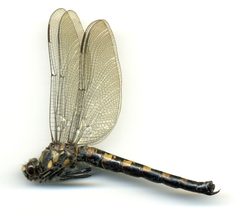
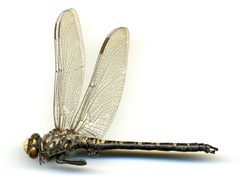
Tanypteryx hageni, the black petaltail, is a rare in the Petaluridae and one of only two members of the Tanypteryx. It represents a phylogenetically ancient lineage that diverged from its Japanese sister species T. pryeri approximately 70-73 million years ago, making it a 'living fossil' among dragonflies. The species is a restricted to montane fen environments in the Pacific Northwest of North America, where nymphs construct and inhabit water-filled burrows—a unique strategy shared with other petaltail species but uncommon among dragonflies generally.
Pronunciation
How to pronounce Tanypteryx hageni: /ˌtænɪpˈtɛrɪks ˈhɑːdʒəni/
These audio files are automatically generated. While they are not always 100% accurate, they are a good starting point.
Images
Habitat
Montane fen ; nymphs exclusively inhabit groundwater-driven wetlands characterized by soils saturated by groundwater, commonly found around springs and in riparian areas of headwater streams. Nymphs dig and maintain burrows that fill with water.
Distribution
Pacific Northwest of North America, from California to British Columbia. The sister Tanypteryx pryeri occurs in Japan; the trans-Pacific disjunction likely associated with disappearance of the Beringian land bridge in the late Cretaceous.
Life Cycle
Nymphal stage spent exclusively in fen ; nymphs collected from burrows near Cherry Hill Campground in Lassen National Forest, California in fall 2020. Duration of nymphal development and details of not documented in available sources.
Behavior
Nymphs dig and maintain burrows that fill with water—a displayed by a number of other petaltail but uncommon in the vast majority of .
Ecological Role
Fen ; fens contain high proportion of North American biodiversity including 15-20% of rare and uncommon plant in some national forests, and are the most floristically diverse wetlands in the United States. Specific trophic role not documented.
Human Relevance
Subject of conservation research; first non-libelluloid to have a -length assembly (2022), which may facilitate research on and support conservation efforts for this rare .
Similar Taxa
- Tanypteryx pryeriSister found in Japan; separated by ~70-73 million years of divergence; the only other member of the Tanypteryx
- Other Petaluridae (petaltail dragonflies)Share the distinctive nymphal of burrow-digging in wet ; -level trait distinguishes them from most other families
More Details
Genomic significance
First assembly for any non-libelluloid ; -length assembly of 1.68 Gbp with scaffold N50 of 206.6 Mb and 96.2-96.8% single-copy BUSCO completeness, making it one of the highest quality Odonata genomes produced to date.
Evolutionary history
Diverged from sister T. pryeri over 70 million years ago and separated from the most closely related Odonata with a reference (likely a libelluloid) approximately 150 million years ago.
Sources and further reading
- BugGuide
- Wikipedia
- GBIF taxonomy match
- iNaturalist taxon
- NCBI Taxonomy
- Catalogue of Life
- Don't Miss the Dragonfly Open House Nov. 6 at Bohart Museum of Entomology | Bug Squad
- Dragonfly Enthusiasts, Unite! Open House Set Nov. 6 at Bohart Museum | Bug Squad
- Bohart Museum Open House: Dragonflies Rule! | Bug Squad
- Publications | Entomology Research Museum
- Hagenius brevistylus Archives - Entomology Today
- When pearly-eye meets dragonfly: Northern pearly-eye, Enodia anthedon, and clubtail dragonflies, Gomphidae spp. — Bug of the Week
- Studies on the Biology of Tanypteryx hageni in California1
- A Chromosome-length Assembly of the Black Petaltail ( Tanypteryx hageni ) Dragonfly
- A Chromosome-length Assembly of the Black Petaltail ( Tanypteryx hageni ) Dragonfly