
Arigomphus
Needham, 1897
Pond Clubtails
Species Guides
7- Arigomphus cornutus(Horned Clubtail)
- Arigomphus furcifer(Lilypad Clubtail)
- Arigomphus lentulus(Stillwater Clubtail)
- Arigomphus maxwelli(bayou clubtail)
- Arigomphus pallidus(gray-green clubtail)
- Arigomphus submedianus(Jade Clubtail)
- Arigomphus villosipes(Unicorn Clubtail)
Arigomphus is a of in the Gomphidae, commonly known as the pond clubtails. The genus contains seven recognized , all to North America. Males possess the club-shaped abdominal tip characteristic of gomphids, while females lack this feature. The genus is notable for its ability to complete development in artificial ponds, a trait uncommon among other gomphid genera.
Pronunciation
How to pronounce Arigomphus: /ˌærɪˈɡɒmfəs/
These audio files are automatically generated. While they are not always 100% accurate, they are a good starting point.
Identification
Males are identified by the combination of a clubbed and relatively plain, unpatterned coloration. Females lack the abdominal club and may be confused with female gomphids of other ; examination of terminal appendages and wing venation details is required for definitive identification. The genus is distinguished from other Gomphidae by its association with pond and of artificial water bodies. -level identification requires examination of male claspers, thoracic pattern details, and geographic range.
Images
Appearance
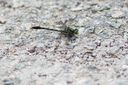
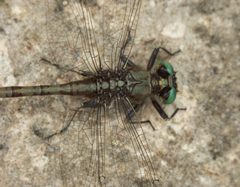
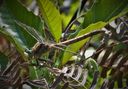
Medium-sized with relatively plain coloration compared to other gomphids. Males have a distinctly clubbed tip on the , formed by expanded terminal segments; females lack this club. Body coloration is generally subdued, with gray-green, brown, or pale tones predominating. Wings are clear with typical odonate venation. within the show limited pattern variation.
Habitat
Associated with lentic (still water) including ponds, marshes, and sluggish bayous. Unlike most gomphids, which are typically riverine or stream-dwelling, Arigomphus have been documented emerging from artificial ponds and constructed water bodies.
Distribution
to North America. Documented from the United States and Canada, with records from Vermont and throughout the continental range.
Life Cycle
Aquatic nymphal stage develops in still or slow-moving water. has been observed from both natural ponds and artificial water bodies. Specific details on voltinism and nymphal development duration are not documented for the .
Ecological Role
As with other odonates, nymphs function as aquatic , and are aerial predators of small flying insects. The 's of artificial suggests potential role in colonizing disturbed or novel aquatic .
Human Relevance
The may serve as an indicator of pond health. Its documented use of artificial ponds suggests potential value for in constructed wetlands, though this has not been formally studied.
Similar Taxa
- Other Gomphidae generaMost gomphids are associated with flowing water (streams and rivers) rather than ponds, and many have more striking color patterns. Arigomphus is distinguished by its pond association and plain appearance.
- Aeshnidae (darners)Large with meeting dorsally; Arigomphus has separated eyes and lacks the robust build of darners.
- Libellulidae (skimmers)Often have broader wings, more varied color patterns, and different perching ; Arigomphus has narrower wings typical of Gomphidae and the characteristic abdominal club in males.
More Details
Species diversity
The comprises seven recognized : A. cornutus (horned clubtail), A. furcifer (lilypad clubtail), A. lentulus (stillwater clubtail), A. maxwelli (bayou clubtail), A. pallidus (gray-green clubtail), A. submedianus (jade clubtail), and A. villosipes (unicorn clubtail). Species epithets often reflect preferences or morphological features.
Nomenclature
established by Needham in 1897. The 'pond clubtails' reflects both the aquatic and the diagnostic abdominal club of males.