
Dorocordulia libera
(Selys, 1871)
Racket-tailed Emerald
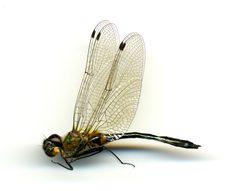
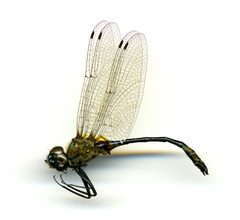
Dorocordulia libera, the racket-tailed emerald, is a in the Corduliidae. It is characterized by metallic green coloration and a slender build. The species occurs in northeastern North America, where it inhabits shallow wetlands. are active during the spring and early summer months.

Pronunciation
How to pronounce Dorocordulia libera: //ˌdɔːroʊkɔːrˈduːliə ˈlɪbərə//
These audio files are automatically generated. While they are not always 100% accurate, they are a good starting point.
Identification
The combination of metallic green coloration, slender build, and clear wings distinguishes this from other . The specific epithet 'libera' and 'racket-tailed emerald' suggest a distinctive tail , though detailed diagnostic features for separation from are not provided in available sources.
Images
Appearance
Metallic green, slender with brown hair, black legs, and clear wings. The body exhibits the characteristic emerald green sheen typical of the Corduliidae .
Habitat
Shallow bogs, ponds, streams, and other wetlands. The is associated with shallow, vegetated freshwater .
Distribution
Northeastern United States and southeastern Canada. Specific records include Vermont, USA.
Seasonality
Spring and early summer activity period, typical for emerald dragonflies in temperate regions.
Similar Taxa
- Other Dorocordulia speciesCongeneric share metallic green coloration and slender build, requiring careful examination of morphological details for identification.
- Other Corduliidae (emerald dragonflies) members share metallic green coloration; separation requires attention to body proportions, wing venation, and abdominal structure.
More Details
Taxonomic History
Originally described as Cordulia libera by Selys in 1871, later transferred to the Dorocordulia.
Sources and further reading
- BugGuide
- Wikipedia
- GBIF taxonomy match
- iNaturalist taxon
- NCBI Taxonomy
- Catalogue of Life
- Libroscope: a new vision for ‘liberating’ published biodiversity data
- Plazi and the Biodiversity Literature Repository (BLR) awarded EUR 1.1 million from Arcadia Fund to grant free access to biodiversity data | Blog
- Bee’s eye view of 2019 election pledges - Headline report - Buglife Blog - Buglife
- FAIR, linked, open and future-proof biodiversity data?
- Will our new UK Members of the EU Parliament look after bugs? - Buglife Blog - Buglife