
Sympherobiinae
Genus Guides
1Sympherobiinae is a of brown lacewings within the Hemerobiidae. These small, delicate neuropterans are of soft-bodied arthropods. The subfamily is distinguished by specific wing venation patterns and genitalic structures. Sympherobiinae are found primarily in the New World, with greatest diversity in the Neotropics. They are generally less studied than the nominate subfamily Hemerobiinae.
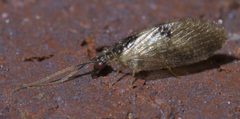
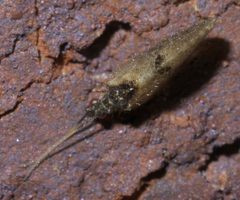
Pronunciation
How to pronounce Sympherobiinae: /sɪmfɛrɔbaɪinaɪ/
These audio files are automatically generated. While they are not always 100% accurate, they are a good starting point.
Identification
Sympherobiinae can be distinguished from the nominate Hemerobiinae by wing venation characters, including details of the radial sector and media branches. Male genitalia, particularly the structure of the gonarcus and parameres, provide definitive identification. are generally small, with forewing length typically under 10 mm. Wing markings, when present, tend to be less pronounced than in many Hemerobiinae species.
Images
Habitat
occur in diverse terrestrial including forests, woodlands, and shrublands. Many are associated with vegetation in humid microclimates. Specific microhabitat preferences vary by species and remain poorly documented for most .
Distribution
Primarily distributed in the Americas, with range extending from the southwestern United States through Mexico, Central America, and South America. Greatest occurs in the Neotropical region. The is absent from the Palearctic, Afrotropical, and Australasian regions.
Ecological Role
of small soft-bodied arthropods including aphids, scale insects, and other prey items. Specific ecological impacts have not been quantified. They contribute to natural in their , though their effectiveness relative to other groups is unknown.
Human Relevance
No documented direct economic importance. Potential value in of agricultural and forestry pests has not been systematically evaluated.
Similar Taxa
- HemerobiinaeThe nominate of Hemerobiidae; distinguished by differences in wing venation, particularly the branching pattern of the radial sector, and male genitalic structures. Hemerobiinae has global distribution whereas Sympherobiinae is restricted to the Americas.
More Details
Taxonomic history
Sympherobiinae has been recognized as a distinct lineage within Hemerobiidae based on morphological synapomorphies. The includes the Sympherobius and related . Phylogenetic relationships within Hemerobiidae remain under investigation.