
Notiobiellinae
Genus Guides
1Notiobiellinae is a of brown lacewings within the Hemerobiidae. Members of this subfamily are small to medium-sized neuropteran insects characterized by specific wing venation patterns and genitalic structures that distinguish them from other hemerobiid subfamilies. The subfamily includes such as Notiobiella and Zygobiella. These insects are predatory as larvae and , contributing to of small pests.
Pronunciation
How to pronounce Notiobiellinae: //ˌnoʊtiː.oʊˈbiːlɪniː//
These audio files are automatically generated. While they are not always 100% accurate, they are a good starting point.
Identification
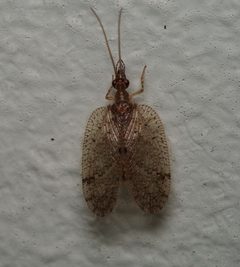
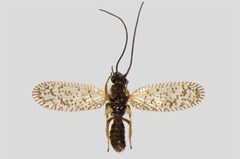
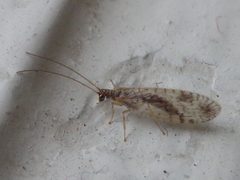
Distinguished from other Hemerobiidae by wing venation characters including the arrangement of radial and medial sectors, and by male genitalic structures. Notiobiellinae typically have a more complete set of crossveins in the radial sector compared to Hemerobiinae. Identification to level requires examination of wing venation details and genitalia; Notiobiella and Zygobiella are separated by differences in the male paramere structure and female subgenital plate .
Images
Appearance
are small to medium-sized lacewings with brownish or tan coloration. Wings are typically hyaline with brownish markings and possess distinct venation patterns including numerous crossveins and forked costal veinlets. Body form is generally slender with long, . Larvae are elongate, somewhat flattened, with prominent sickle-shaped adapted for .
Habitat
Found in diverse terrestrial including forests, woodlands, shrublands, and occasionally disturbed areas. and larvae occupy vegetation where prey occur, including tree bark, leaf surfaces, and ground litter. Specific microhabitat associations vary by and .
Distribution
Widely distributed across multiple continents including North America, South America, Europe, Africa, Asia, and Australia. The shows greatest diversity in tropical and subtropical regions, with some having more restricted geographic ranges.
Seasonality
activity patterns vary by and geographic location. In temperate regions, adults are most commonly observed during spring and summer months. In tropical regions, activity may occur year-round with peaks corresponding to favorable moisture and prey availability conditions.
Diet
Larvae and are predatory, feeding on small soft-bodied arthropods including aphids, scale insects, mites, and other small insects. Specific prey preferences vary among but generally align with available prey in occupied microhabitats.
Life Cycle
Development includes , larva, pupa, and stages. Eggs are laid on vegetation or other substrates. Larvae are active , passing through three instars before spinning silken cocoons for . Adults emerge from cocoons and may feed on prey, honeydew, or other liquid food sources in addition to small arthropods.
Behavior
are generally or , often attracted to light. Larvae are solitary, active hunters that move through vegetation or across substrates in search of prey. Both life stages are capable of rapid movement when disturbed. Some may exhibit seasonal or patterns in response to prey availability.
Ecological Role
Functions as a of small pests in terrestrial . Contributes to natural of potential agricultural and forest pests including aphids, scale insects, and mites. Serves as prey for larger arthropods, birds, and other .
Human Relevance
Of interest in research due to predatory habits, though less commercially utilized than some other groups. Occasionally documented in agricultural and horticultural settings where they contribute to pest suppression. Not considered medically or economically significant as pests.
Similar Taxa
- HemerobiinaeOther within Hemerobiidae; distinguished by wing venation patterns, particularly the reduced number of crossveins in the radial sector and differences in male genitalic structures.
- DrepanacrinaeAnother Hemerobiidae ; separated by forewing venation with fewer branches in the radial sector and distinctive shape of the pseudomedia.
More Details
Taxonomic History
Notiobiellinae was established based on distinctive wing venation and genitalic characters that separate these from the nominate Hemerobiinae. The classification has been refined through phylogenetic studies incorporating morphological and molecular data.
Research Status
and of most Notiobiellinae remain poorly documented compared to the more extensively studied Hemerobiinae. Many species are known from few specimens, and stages are undescribed for numerous .