
Conwentzia
Enderlein, 1905
dustywing lacewings, waxwing lacewings
Species Guides
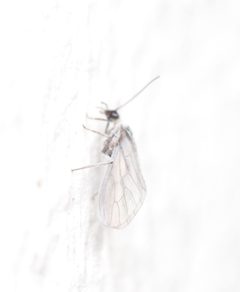
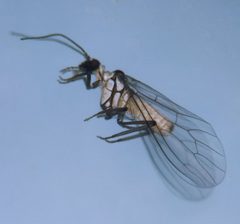
1Conwentzia is a of minute neuropteran insects in the Coniopterygidae, commonly known as dustywings or waxwing lacewings. The genus contains approximately 14 described distributed across Europe, Africa, Asia, and North America. These insects are characterized by their distinctive waxy coating and reduced hindwings. Species identification typically requires microscopic examination of genitalia due to minimal external morphological differences between .
Pronunciation
How to pronounce Conwentzia: /kɔnˈvɛntsi.a/
These audio files are automatically generated. While they are not always 100% accurate, they are a good starting point.
Identification
Conwentzia are extremely difficult to distinguish from one another based on external alone. Reliable identification requires microscopic examination of genital structures. Some species pairs, such as C. pineticola and C. psociformis, show variable and intermediate adult forms that can appear identical, but can be separated by distinct larval characters.
Images
Habitat
Associated with woody vegetation; C. pineticola and C. psociformis have been recorded in orchards. Specific microhabitat preferences for most are poorly documented.
Distribution
Present in most of Europe; additional records from Africa (C. africana, C. capensis), North America (C. californica), and Asia (C. sinica). GBIF records confirm presence in Denmark, Norway, and Sweden.
Life Cycle
and larval stages have been described for C. pineticola; larvae of this are morphologically distinct from those of C. psociformis, providing the most reliable means of separating these two species.
Behavior
Forewings carried nearly side-by-side when at rest, a posture shared with many other Neuroptera.
Similar Taxa
- Other Coniopterygidae generaSimilar minute size and waxy covering; Conwentzia distinguished by specific wing venation and genitalia structure requiring expert examination.
- Hemerobiidae (brown lacewings)Both are small lacewings, but Hemerobiidae lack waxy covering and have fully developed hindwings.
More Details
Taxonomic history
C. pineticola and C. psociformis were historically treated as forms of a single due to overlapping ; larval characters established their specific distinctness.