
Dinokanaga
Archibald, 2005
Species Guides
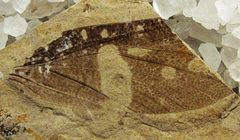
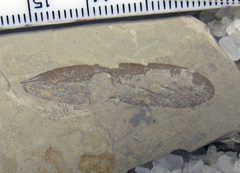
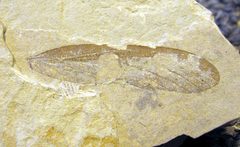
2Dinokanaga is an extinct of in the Dinopanorpidae, known from six described from Eocene compression fossils in British Columbia, Canada, and Washington state, USA. The genus was established in 2005 by Bruce Archibald based on over 20 specimens from five fossil sites in the Okanagan Highlands. All six species are distinguished primarily by wing venation and shape characteristics. The genus name derives from Greek 'deino' (terrible/monstrous) and 'Okanaga' referring to the type locality.
Pronunciation
How to pronounce Dinokanaga: /ˌdɪnoʊkəˈnæɡə/
These audio files are automatically generated. While they are not always 100% accurate, they are a good starting point.
Identification
Dinokanaga is distinguished from the only other known in Dinopanorpidae, Dinopanorpa, by wing venation: Dinokanaga has the 'Rs' branched 3-5 times and possesses fine reticulated crossveins, whereas Dinopanorpa lacks such reticulation. Within the genus, are separated by wing shape, size, color patterning, and specific vein characters. D. hillsi has subtriangular wings widest at middle with three distinct dots; D. dowsonae has larger penniform wings; D. andersoni has notably narrower wings; D. sternbergi has short 'Sc' vein and small size; D. webbi is smallest with simple crossveins and patchy reticulation; D. wilsoni has broadly rounded oval hindwing shape.
Images
Habitat
All known from lacustrine deposits of the Eocene Okanagan Highlands, representing upland lake systems surrounded by warm temperate forest with nearby volcanism. The paleoenvironment had a mesic upper microthermal to lower mesothermal climate with seasonably equitable conditions, winter temperatures rarely dropping to snow levels, and mean temperatures estimated at 8.0–10.7°C. Paleoelevation estimates range 1.1–2.9 km, higher than coeval coastal lowland tropical forests.
Distribution
Known exclusively from Early Eocene fossil sites in western North America: British Columbia, Canada (McAbee Fossil Beds, Whipsaw Creek/Allenby Formation, Horsefly River) and Washington state, USA (Republic).
Human Relevance
Named in honor of collectors and researchers: D. hillsi for Dr. Len Hills; D. dowsonae for Shelley Dowson; D. andersoni for Eric Anderson; D. sternbergi for Michael Sternberg; D. wilsoni for Dr. Mark Wilson; D. webbi for Robin Webb. Contributes to understanding of Eocene highland and evolution.
Similar Taxa
- DinopanorpaOnly other in Dinopanorpidae; distinguished by lack of fine reticulated crossveins and different 'Rs' branching pattern.
More Details
Preservation and color patterns
Fossil specimens of high preservation quality sometimes retain original color patterning, described as mostly dark with light to clear areas. D. hillsi and D. dowsonae are the only with known body fossils; all others known from isolated wings only.
Stratigraphic distribution
D. dowsonae is the most widespread , occurring at three fossil sites, while the other five species are each restricted to a single locality. This uneven distribution may reflect sampling or genuine ecological differences.