
Dinopanorpidae
Carpenter, 1972
Genus Guides
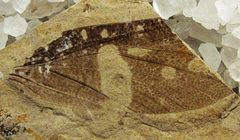
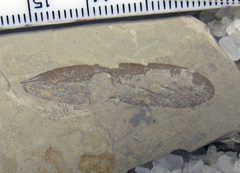
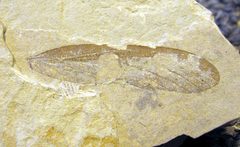
1Dinopanorpidae is an extinct of scorpionflies (order Mecoptera) comprising two and seven described . The family was established in 1972 by paleoentomologist Frank Carpenter to accommodate the genus Dinopanorpa, originally described in 1924. These insects are distinguished by a uniquely elongated R1 wing that nearly reaches the wing apex—a feature unknown in any other mecopteran lineage. Fossil evidence indicates a restricted temporal and geographic distribution spanning the Paleocene to Eocene in Russia and western North America.
Pronunciation
How to pronounce Dinopanorpidae: //ˌdaɪnoʊˈpænɔrˌpaɪdiː//
These audio files are automatically generated. While they are not always 100% accurate, they are a good starting point.
Identification
Distinguished from all other Mecoptera by the elongated R1 that extends nearly to the wing apex. Wings are long with numerous reticulated crossveins and, when coloration is preserved, show dark bases with light to clear patterning. Forewing lengths range from 28 to 43 mm. As with all Mecoptera, members possess an elongated rostrum and four wings of nearly equal size.
Images
Distribution
Restricted to Paleocene-Eocene deposits in Russia and western North America. Dinopanorpa megarche is known from the Khutsin Formation of Primorsky Krai, Russia (early Eocene to late Eocene/early Oligocene boundary). An undescribed Dinopanorpa occurs in the Paleocene Tadushi Formation, also in Russia. The Dinokanaga is exclusive to Ypresian fossil sites in western North America, specifically the Okanagan Highlands paleobiotic .
Similar Taxa
- PanorpidaeDinopanorpa was originally assigned to this due to general morphological resemblance, but differs in the diagnostic elongated R1 and was subsequently separated into its own family.
- Other Mecoptera familiesAll other extant and extinct mecopteran lack the uniquely elongated R1 that nearly reaches the wing apex, which is the primary diagnostic character for Dinopanorpidae.
More Details
Etymology
The name combines Greek deino ('terrible' or 'monstrous') with 'Panorpidae', reflecting the initial taxonomic placement and the impressive size of these insects.
Taxonomic composition
The contains seven described : six in Dinokanaga (western North America) and one in Dinopanorpa (Russia). Dinopanorpa is , represented solely by D. megarche.
Preservation limitations
Most are known only from compression wing fossils, limiting knowledge of general body and non-wing characters.