Boreus reductus
Carpenter, 1933
Snow scorpionfly
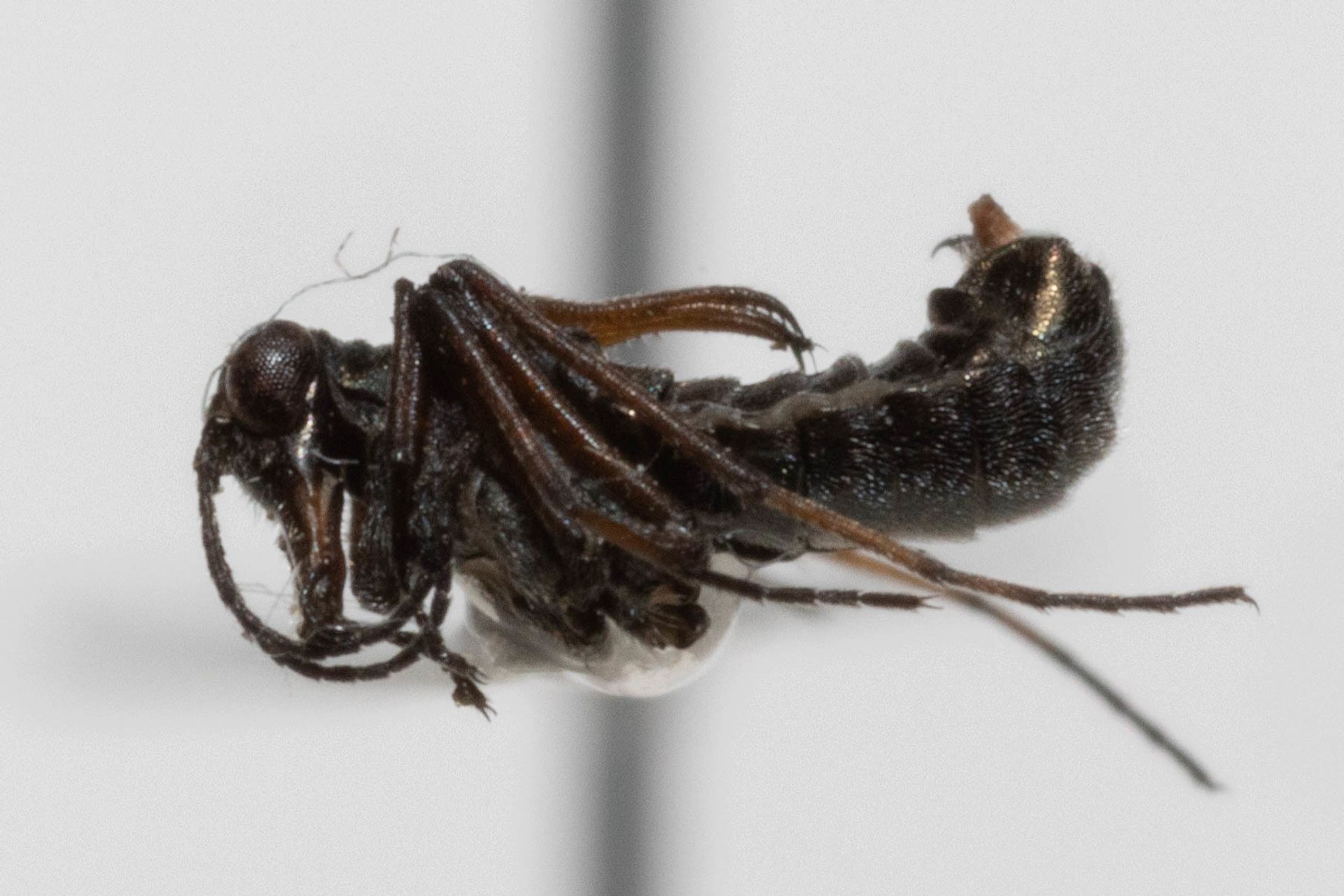
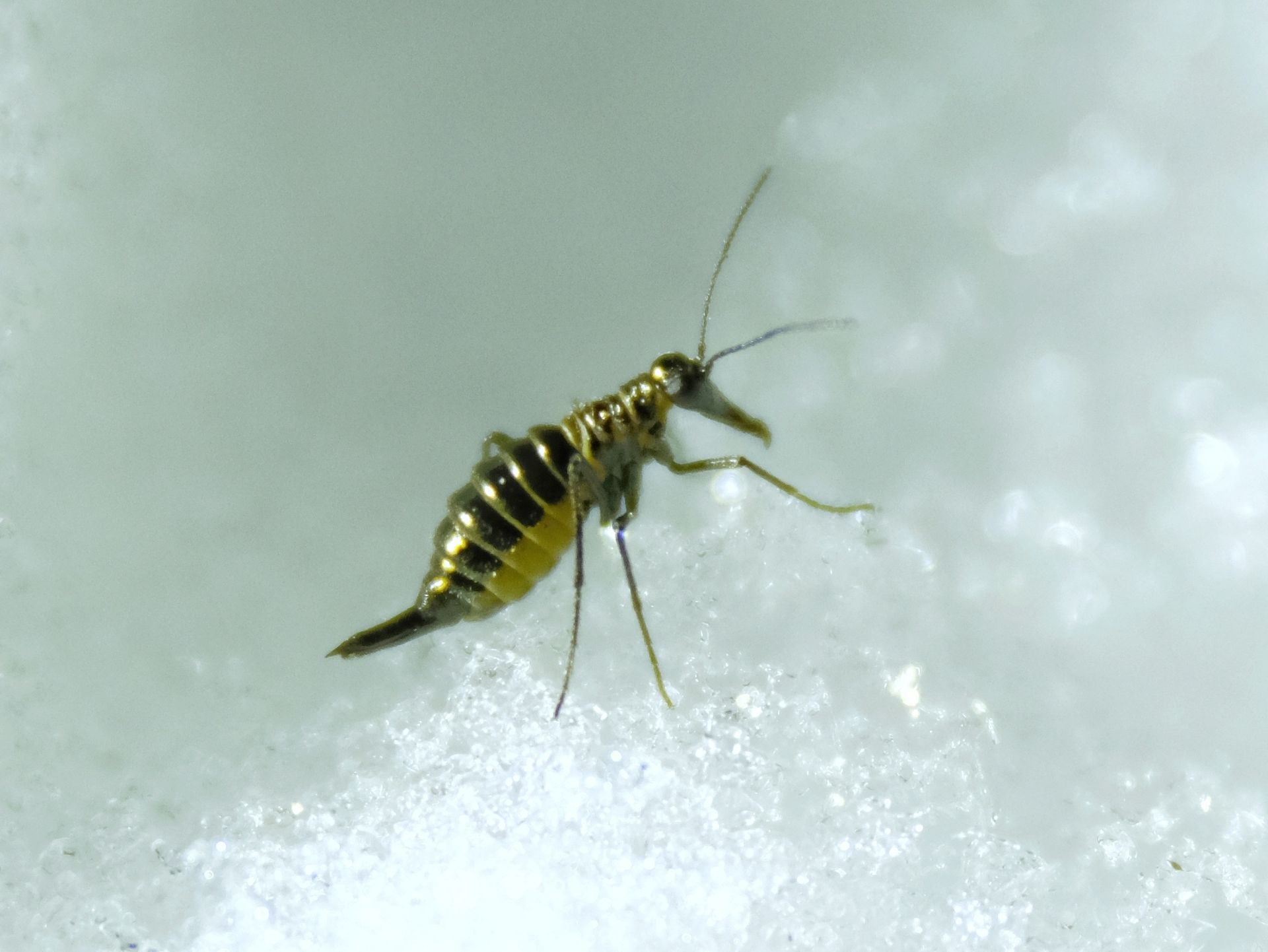
Boreus reductus is a wingless of snow scorpionfly in the Boreidae, order Mecoptera. are active during winter months and can be observed hopping across snow and ice. Unlike many Mecoptera, this species lacks functional wings entirely. Adults and larvae feed on mosses and liverworts. Males possess enlarged, upward-curving genitalia that resemble a 's stinger, giving the group its . The species engages in a distinctive mating where males carry females on their backs.
Pronunciation
How to pronounce Boreus reductus: /ˈbɔːriəs riˈdʌktəs/
These audio files are automatically generated. While they are not always 100% accurate, they are a good starting point.
Images
Habitat
Found in and montane environments, typically near streams in lowland forests. occur on snow, ice, and on mosses and liverworts that grow in moist, shaded .
Distribution
North America; specifically recorded in Maryland and other eastern states, with broader distribution across regions of the continent.
Seasonality
Active during winter months, from December through February. can be observed on warm winter days even when snow and ice are present.
Diet
and larvae feed on mosses and liverworts (Bryophyta and Marchantiophyta).
Behavior
Males grasp females and place them on their backs for a ride during courtship. disperse by running and hopping across snow between breeding areas rather than flying.
Ecological Role
Herbivore that consumes bryophytes in winter . Serves as prey for other cold-active arthropods and small vertebrates.
Similar Taxa
- Panorpa spp.Winged scorpionflies in the same order Mecoptera; Boreus reductus is distinguished by being completely wingless and active in winter rather than spring and summer.
- Boreus spp.Other snow scorpionflies share the wingless condition and winter activity; specific identification to level requires examination of genitalia and other subtle morphological features.
Sources and further reading
- BugGuide
- GBIF taxonomy match
- iNaturalist taxon
- Catalogue of Life
- Dashing through the snow: Snow scorpionflies, Boreus sp. — Bug of the Week
- Dashing through the snow: Snow scorpionflies, Boreus sp. — Bug of the Week
- Dashing through the snow, Snow scorpionflies, Boreus sp. — Bug of the Week
- Archive — Bug of the Week
- Did you ever see a scorpion fly? Panorpa sp. — Bug of the Week
- Dashing through the snow: Snow scorpionflies, Boreus sp. — Bug of the Week