
Boreus californicus
Packard, 1870
California Snow Scorpionfly
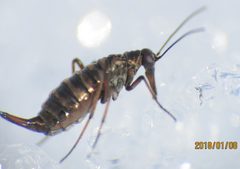
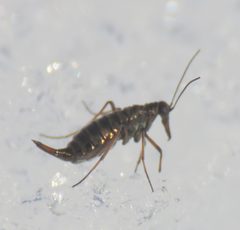
Boreus californicus is a flightless of snow scorpionfly to western North America. It is active on snow surfaces across a broad elevation gradient from valley grasslands to alpine areas above tree line. The species exhibits a distinctive tied to snow cover, with mating occurring directly on snow surfaces. Surface activity has been documented at temperatures ranging from −5.0°C to 5.5°C, with pairs in copula observed between −0.5°C and 5.5°C.
Pronunciation
How to pronounce Boreus californicus: /ˈbɔːriəs ˌkælɪˈfɔːrnɪkəs/
These audio files are automatically generated. While they are not always 100% accurate, they are a good starting point.
Images
Habitat
Snow surfaces in valley grasslands, subalpine conifer forests, and alpine areas above tree line. Elevation range 991–2850 m in western Montana.
Distribution
Western North America; documented in western Montana, USA across an elevation gradient of nearly 2000 m. GBIF records indicate presence in North America broadly.
Seasonality
Active on snow at low elevations (991–1500 m) from early November to early March; at high elevations (1800–2850 m) from early October to early January and late June. Likely active on snow in most months except mid- and late summer.
Behavior
Flightless. Mating occurs on snow surfaces, with pairs in copula documented at snow surface temperatures from −0.5°C to 5.5°C. Jumping mobility on snow facilitates mate searching and likely contributes to and reduced inbreeding.
More Details
Temperature tolerance
Snow surface activity documented from −5.0°C to 5.5°C; mating pairs found from −0.5°C to 5.5°C.
Mating phenology by elevation
Low elevation mating: November to late February. High elevation mating: late June. Subalpine and alpine likely support mating in early summer plus late autumn through spring due to persistent snow conditions.
Sources and further reading
- BugGuide
- Wikipedia
- GBIF taxonomy match
- iNaturalist taxon
- NCBI Taxonomy
- Catalogue of Life
- Encyrtid Holdings | Entomology Research Museum
- California Has No State Bee--Yet! | Bug Squad
- Bohart Museum: Learn about California's State Insect on UC Davis Picnic Day | Bug Squad
- Grasshoppers of Colorado
- Grasshoppers of Colorado
- Sex Attraction Pheromone Improves Detection of a Threatened Beetle
- Snow-surface activity of California Snow Scorpionfly, <i>Boreus californicus</i> (Mecoptera: Boreidae), in western Montana, USA