
Packardia geminata
(Packard, 1864)
Jeweled Tailed Slug Moth
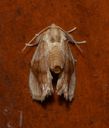
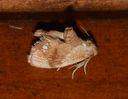
Packardia geminata, commonly known as the Jeweled Tailed Slug , is a of slug moth in the Limacodidae. The species was first described by Packard in 1864 under the basionym Cyrtosia geminata. Like other limacodid moths, the larvae are slug-like caterpillars with reduced that move by gliding rather than crawling. The family is known for caterpillars that often possess urticating (stinging) spines or setae. are small to medium-sized moths with relatively broad wings. The specific epithet "geminata" (Latin for "twinned" or "doubled") may refer to paired markings or features on the wings or body.

Pronunciation
How to pronounce Packardia geminata: /pəˈkɑːr.di.ə d͡ʒɛ.məˈnɑː.tə/
These audio files are automatically generated. While they are not always 100% accurate, they are a good starting point.
Identification
can be distinguished from other Packardia and limacodid by specific wing patterns and genitalia characteristics. The "jeweled tail" feature referenced in the may provide a field mark for identification. Larval identification relies on plant associations and morphological features of the slug-like body form with reduced . Molecular and genitalic examination is typically required for definitive species-level identification within the .
Images
Habitat
Specific preferences are not well documented in available sources. As a North American limacodid, likely associated with deciduous forests and woodlands where larval plants occur. The distribution records from Vermont and broader US suggest occurrence in temperate eastern North American forested regions.
Distribution
Recorded from Vermont, United States, with broader distribution across the United States based on GBIF and iNaturalist records. The appears to be primarily eastern North American in distribution.
Life Cycle
Complete with , larval, pupal, and stages typical of Lepidoptera. Larval stage is a slug-like caterpillar characteristic of Limacodidae. Specific details on voltinism, stage, and developmental timing are not available in sources.
Behavior
are likely and attracted to light, consistent with patterns observed in many Limacodidae. Larvae exhibit the characteristic slug-like gliding locomotion of the , with reduced limiting them to smooth leaf surfaces rather than twigs and stems.
Ecological Role
Larval stage functions as a folivore, feeding on plant leaves. As with other limacodids, the urticating spines of larvae may serve as defense against vertebrate . may contribute to pollination through incidental contact with flowers during nectar feeding, though this is not well documented.
Human Relevance
The "Jeweled Tailed Slug " suggests potential aesthetic or educational interest. Like other limacodids, larvae may cause minor defoliation of ornamental or native trees and shrubs, but are not considered significant economic pests. The urticating spines of larvae may cause skin irritation if handled, representing a minor human health consideration.
Similar Taxa
- Other Packardia speciesCongeneric share similar and larval slug-like form; require detailed examination of genitalia and wing patterns for separation.
- Other LimacodidaeMany limacodid share the characteristic slug-like larval form and broad-winged ; distinguished by specific wing patterns, coloration, and associations.
More Details
Taxonomic History
Originally described as Cyrtosia geminata by Packard in 1864, later transferred to the Packardia. The genus Packardia is named in honor of Alpheus Spring Packard (1839-1905), an prominent American entomologist and paleontologist.
iNaturalist Observations
As of the data source, iNaturalist contained 1,467 observations of this , indicating it is relatively well-observed and photographed by citizen scientists, facilitating identification and distribution mapping.
Research Needs
Basic biological information including larval plants, detailed , , and ecological interactions remain poorly documented for this and would benefit from focused study.