
Monoleuca semifascia
(Walker, 1855)
Pin-striped Vermilion Slug Moth
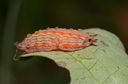
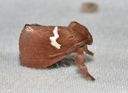
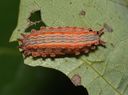
Monoleuca semifascia is a slug in the Limacodidae, commonly known as the Pin-striped Vermilion Slug Moth. The is recognized by its distinctive coloration and slug-like larval form characteristic of the family. It has been documented across multiple observation platforms with a notable presence in the eastern United States. The species was originally described by Walker in 1855 under the basionym Limacodes semifascia.
Pronunciation
How to pronounce Monoleuca semifascia: //ˌmɒnoʊˈljuːkə ˌsɛmɪˈfæʃiə//
These audio files are automatically generated. While they are not always 100% accurate, they are a good starting point.
Identification
distinguished from other Monoleuca by the combination of vermilion ground color with black pin-striping. Most similar to Monoleuca obliqua, which has more oblique rather than longitudinal striping. Separated from other Limacodidae by the specific shade of vermilion and stripe pattern. Larvae require microscopic examination for definitive identification.
Images
Habitat
Deciduous forests and woodland edges; associated with oak and other hardwood trees.
Distribution
Eastern North America, primarily United States. Records concentrated in the eastern deciduous forest biome from the Great Lakes region to the Gulf Coast.
Seasonality
active primarily June through August; larval stage spring through early summer.
Human Relevance
Larvae may possess urticating spines typical of Limacodidae and can cause skin irritation upon contact; handle with caution.
Similar Taxa
- Monoleuca obliquaSimilar vermilion coloration but with oblique rather than longitudinal black markings on forewings.
- Packardia geminataOverlapping distribution and similar size; distinguished by different wing pattern and coloration.