
Fulgoraecia exigua
(H. Edwards, 1882)
Planthopper Parasite Moth
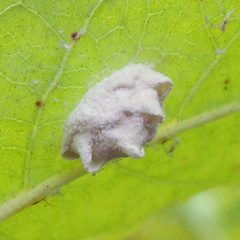
Fulgoraecia exigua is a small in the Epipyropidae, commonly known as the planthopper moth. The is an obligate of planthoppers in the family Issidae, with larvae attaching to and feeding on their . are non-feeding with mouthparts and short adult lifespans. First described by H. Edwards in 1882, it has been recorded across much of the eastern and central United States, with a first Canadian record documented from southern Ontario in 2021.


Pronunciation
How to pronounce Fulgoraecia exigua: //fʊl.ɡɔːˈreɪ.si.ə ɛkˈsɪɡ.wə//
These audio files are automatically generated. While they are not always 100% accurate, they are a good starting point.
Identification
Larvae are ectoparasitic on planthoppers and may be encountered attached to insects rather than free-living. are small with reduced, non-functional mouthparts. Specific diagnostic features for distinguishing F. exigua from other Epipyropidae are not detailed in available sources.
Images
Habitat
Tallgrass prairie ; associated with planthopper . First Canadian specimens collected in the Ojibway Prairie area of southern Ontario.
Distribution
North America: United States (New Jersey and Pennsylvania south to central Florida, west to Missouri, Texas, New Mexico, and Arizona); Canada (first recorded in southern Ontario, Windsor area in 2021).
Diet
Larvae feed as on planthoppers ( Issidae). do not feed; they possess mouthparts.
Host Associations
- Issidae - of planthoppers parasitized by larvae
Life Cycle
Larvae are ectoparasitic on planthoppers, attaching to and feeding on . occurs after larval development. emerge with mouthparts and do not feed; they reproduce and die shortly after .
Behavior
Larvae exhibit an obligate ectoparasitic lifestyle, remaining attached to planthoppers throughout development. are short-lived and non-feeding.
Ecological Role
of planthoppers in the Issidae; may contribute to regulation of planthopper in prairie and grassland .
Similar Taxa
- Other Epipyropidae speciesShare ectoparasitic lifestyle on planthoppers; specific associations and geographic range help distinguish F. exigua
More Details
First Canadian Record
The 2021 record from southern Ontario represents a significant northward range extension for this , which was previously known only from the United States. The specimen was collected in the Ojibway Prairie area near Windsor.
Sources and further reading
- BugGuide
- GBIF taxonomy match
- iNaturalist taxon
- NCBI Taxonomy
- Oh, What a (Moth) Night! | Bug Squad
- Blacklighting at the Bohart: They Saw the Light | Bug Squad
- What Will You See at Bohart Museum Open House | Bug Squad
- Quick Guide to Armyworms on Soybean | Beetles In The Bush
- leaf-footed bugs | Beetles In The Bush | Page 2
- The Marvelously Cryptic Dicerca lurida | Beetles In The Bush
- First record of the planthopper parasite moth Fulgoraecia exigua (Edwards) (Lepidoptera: Epipyropidae) in Canada, with notes on its collection and hosts