
Dalceridae
Jewel caterpillar moths
Genus Guides
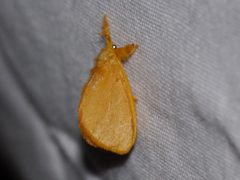
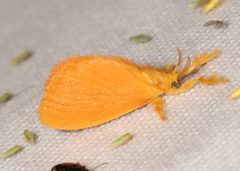
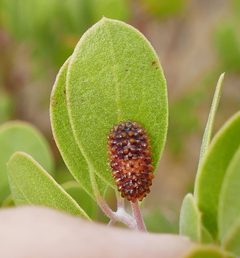
1are a small of zygaenoid comprising approximately 80 described in about one dozen . are generally small to medium-sized with notably hairy bodies. The family is distinguished by their larvae, known as jewel caterpillars, which possess a colorful bead-like gelatinous covering over the . More than half of described species belong to the genus Acraga. The family is part of the limacodid-group, a clade of families with slug-like caterpillars including Limacodidae and Megalopygidae.
Pronunciation
How to pronounce Dalceridae: /dælˈsɛrɪdiː/
These audio files are automatically generated. While they are not always 100% accurate, they are a good starting point.
Identification
distinguished from other zygaenoid by combination of small to medium size and very hairy bodies. Larvae uniquely identified among slug caterpillar families by the presence of a colorful bead-like gelatinous mass covering the , differing from the stinging setae of Megalopygidae and the more typical slug-like form of Limacodidae. Family placement within Zygaenoidea requires dissection or molecular analysis; superficially similar to Limacodidae and Megalopygidae in larval form.
Images
Distribution
Primarily Neotropical region; a few extend into the far southern Nearctic region.
Behavior
Female possess accessory glands that apply a rapidly drying liquid to ; the function of this liquid remains unknown but has been theorized to provide structural strength, adhesive properties, or protection from egg .
Similar Taxa
- LimacodidaeSister with similarly slug-like larvae; distinguished by larvae having gelatinous bead-like covering rather than typical limacodid larval form.
- MegalopygidaeSister with slug-like larvae; distinguished by larvae having gelatinous bead-like covering rather than the dense stinging setae characteristic of megalopygid larvae.
- EpipyropidaeRelated ; formerly included Protacraga which is now assigned to Epipyropidae, whose larvae are typically rather than free-living.
More Details
Taxonomic Structure
Two recognized: Acraginae (Acraga, Dalcerides, Zikanyrops) and Dalcerinae (Ca, Dalcera, Dalcerina, Minacraga, Minacragides, Minonoa, Oroya, Paracraga). More than half of described are in Acraga.
Systematic Position
belongs to the limacodid-group within Zygaenoidea, a clade characterized by of slug-like larval across multiple families.
Sources and further reading
- BugGuide
- Wikipedia
- GBIF taxonomy match
- NCBI Taxonomy
- Catalogue of Life
- New insights and renewed focus on the behavioural and mechanical traits of the larvae of the limacodid-group and related families (Lepidoptera: Aididae, Anomoeotidae, Dalceridae, Himantopteridae, Limacodidae, Megalopygidae, and Somabrachyidae)