
Eidophasia vanella
(Walsingham, 1881)
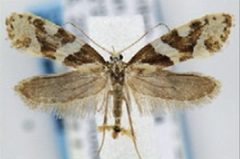
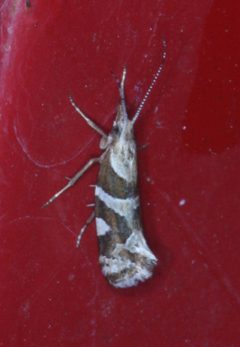
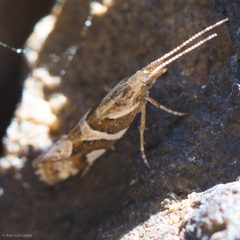
Eidophasia vanella is a small in the Plutellidae, first described by Walsingham in 1881. It is native to western North America, with a range extending from Alberta south to California. The has a forewing length of 7.5–8.5 mm. Larvae have been recorded feeding on Vicia gigantea and Osmorhiza species.
Pronunciation
How to pronounce Eidophasia vanella: //ˌaɪdoʊˈfeɪʒiə vəˈnɛlə//
These audio files are automatically generated. While they are not always 100% accurate, they are a good starting point.
Identification
The small forewing length (7.5–8.5 mm) distinguishes Eidophasia vanella from larger Plutellidae. Within the Eidophasia, identification to level requires examination of genitalia or comparison with . The western North American distribution may help separate it from with different ranges.
Images
Appearance
Small with forewings measuring 7.5–8.5 mm in length. As a member of Plutellidae, likely have narrow, somewhat pointed forewings and a slender body form typical of the .
Distribution
North America from Alberta, Canada south to California, United States.
Diet
Larvae feed on Vicia gigantea and Osmorhiza . feeding habits are unknown.
Host Associations
- Vicia gigantea - larval food plantgiant vetch
- Osmorhiza - larval food plantsweet cicely; -level association
Similar Taxa
- Eidophasia messingiellaAnother North American Eidophasia ; requires dissection or analysis for reliable separation
- Plutella xylostellaCommon diamondback moth in same ; larger (forewings 8–12 mm) and with different larval (Brassicaceae)
More Details
Taxonomic history
Described by Thomas de Grey, 5th Baron Walsingham in 1881, originally placed in a different before transfer to Eidophasia.
Observation rarity
Only 29 observations recorded on iNaturalist as of data compilation, suggesting the is infrequently encountered or underreported.