
Argyroploce
Hübner, [1825], 1816
Species Guides
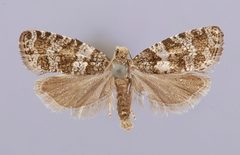
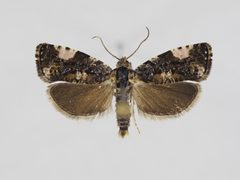
1Argyroploce is a of tortricid moths in the Olethreutinae. The genus contains multiple distributed across the Palearctic region and beyond. At least one species, Argyroploce schistaceana, is an agricultural pest of sugarcane in tropical and subtropical regions.

Pronunciation
How to pronounce Argyroploce: /ˌɑːr.dʒɪˈrɒ.pləˌsi/
These audio files are automatically generated. While they are not always 100% accurate, they are a good starting point.
Identification
in this belong to Olethreutinae, characterized by forewings that often fold into a somewhat triangular or bell-shaped profile at rest. Olethreutine moths typically have well-developed ocelli and reduced chaetosemata on the . Specific diagnostic features for Argyroploce require examination of genitalia and wing pattern details not consistently documented across the genus.
Images
Distribution
Recorded from Denmark, Norway, and Sweden in the Palearctic. within the have broader distributions; A. schistaceana occurs across Asia (Ceylon, China, Taiwan, Indonesia, Malaya, Philippines, Ryukyu Islands, Vietnam), Africa (Madagascar, Mauritius, Réunion), and Australasia/Pacific Islands (Caroline Islands, Mariana Islands).
Human Relevance
Argyroploce schistaceana, the white borer of sugarcane, is a documented agricultural pest. Larvae tunnel into sugarcane stalks, causing economic damage to crops in tropical production regions.
Similar Taxa
- TetramoeraArgyroploce schistaceana has been synonymized with Tetramoera schistaceana in some taxonomic treatments; the two require careful morphological or molecular distinction.
More Details
Taxonomic Note
The Argyroploce was established by Hübner in 1825 (with a date sometimes cited as 1816). The authorship and date have been subject to varying interpretation in lepidopteran literature.