
Scardiinae
Genus Guides
8Scardiinae is a of within the Tineidae. Members are characterized by larval morphological features and the absence of a gnathos in the male genitalia. The subfamily was formerly split to include Tinissinae, now synonymized with Scardiinae. The group contains approximately 20 distributed across tropical and subtropical regions.
Pronunciation
How to pronounce Scardiinae: /ˌskɑr.diˈi.naɪ/
These audio files are automatically generated. While they are not always 100% accurate, they are a good starting point.
Identification
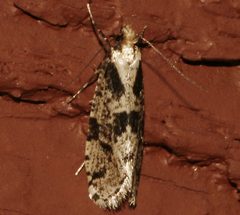
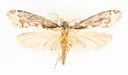
Distinguished from other Tineidae by the lack of gnathos in male genitalia. Larval features provide additional diagnostic characters. Some , such as Tinissa, exhibit elongate brown forewings with purple sheen and elongate hind legs with large tibial tufts; male genitalia with bilobate uncus.
Images
Distribution
Primarily distributed in Afrotropical, Oriental, and Australian regions. Records include China (Hainan, Yunnan, Taiwan, Guangxi), India, Sikkim, Bhutan, Malaysia, Borneo, Indonesia, Philippines, New Guinea, Solomon Islands, and Queensland, Australia.
Diet
Fungivorous; larvae feed on fungi. Tinissa have been observed associated with fungus on bamboo.
Host Associations
- fungus on bamboo - food source association explicitly documented for Tinissa per Robinson 1976
Behavior
attracted to light; specimens frequently collected using light traps. varies by ; in Tinissa, dimorphism is not pronounced.
Ecological Role
Fungivores; likely contribute to nutrient cycling through consumption of fungal material.
Similar Taxa
- other Tineidae subfamiliesScardiinae distinguished by lack of gnathos and specific larval features; other such as Tineinae and Perissomasticinae possess gnathos and differ in genital
More Details
Taxonomic History
The Tinissa and related were formerly placed in the separate Tinissinae, which has been synonymized with Scardiinae based on shared morphological characteristics.
Research Gaps
associations documented for few ; larval and complete details remain poorly known for most .