
Haplotinea insectella
(Fabricius, 1794)
Fungus Grain Moth, Drab Clothes Moth
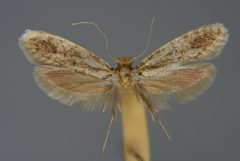
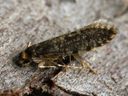
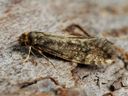
A small tineid with a wingspan of 11–20 mm, found across much of Europe and North America. are active from late May to early August. The is strongly associated with stored products and agricultural buildings, including warehouses, granaries, mills, and farm buildings.
Pronunciation
How to pronounce Haplotinea insectella: //ˌhæploʊˈtɪniə ˌɪnsɛkˈtɛlə//
These audio files are automatically generated. While they are not always 100% accurate, they are a good starting point.
Identification
The combination of small size (11–20 mm wingspan), drab appearance, and in stored product environments distinguishes this from many other Tineidae. The period (late May to early August) and association with granaries and warehouses provide additional context for identification. Specific diagnostic features separating it from congeneric are not documented in available sources.
Images
Appearance
Small with wingspan 11–20 mm. Overall drab coloration consistent with . Detailed wing pattern and body coloration not specified in available sources.
Habitat
Strongly associated with human-modified environments: warehouses, granaries, mills, and farm buildings. These suggest to stored grain and dry organic matter conditions.
Distribution
Europe: widespread except absent from Ireland, the Iberian Peninsula, and western and southern Balkan Peninsula. North America: present (distribution details unspecified in sources).
Seasonality
on wing from end of May to beginning of August. Probably one per year.
Life Cycle
Probably (one per year). Larval development and details not documented in available sources.
Human Relevance
Pest of stored products. Regularly found in warehouses, granaries, mills, and farm buildings, indicating economic significance in agricultural and food storage contexts.
Similar Taxa
- Other Tineidae speciesMany tineid moths share small size and drab appearance. specificity to stored products and granaries helps distinguish H. insectella from associated with natural environments such as leaf litter or bird nests.
More Details
Nomenclature
Originally described as Tinea insectella by Fabricius in 1794; later transferred to Haplotinea.
Common name usage
Two in use: 'Fungus Grain ' (emphasizing food association) and 'Drab ' (describing appearance and superficial similarity to clothes moths).