
Homosetia costisignella
(Clemens, 1863)
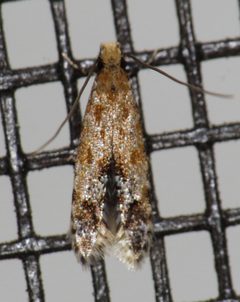
Homosetia costisignella is a small in the Meessiidae, originally described by James Brackenridge Clemens in 1863 as Tinea costisignella. The species has been reclassified from Tineidae to Meessiidae based on phylogenetic studies. It is known from scattered records in eastern North America, with 88 observations documented on iNaturalist. Like other members of this family, it is presumed to be associated with decaying organic matter or fungal substrates, though specific biological details remain poorly documented.
Pronunciation
How to pronounce Homosetia costisignella: //hoʊmoʊˈsiːtiə ˌkɒstɪsɪŋˈnɛlə//
These audio files are automatically generated. While they are not always 100% accurate, they are a good starting point.
Identification
Distinguished from similar small by combination of narrow forewing shape, costal streaking pattern, and structural features of the male genitalia (requires dissection). Separation from congeneric in Homosetia requires examination of genitalic characters and wing pattern details. Distinguished from tineid moths by -level characters including wing venation and larval , though this requires expert determination.
Images
Appearance
A small with narrow, forewings. The specific epithet 'costisignella' refers to markings along the costal margin of the forewing. Wing pattern includes longitudinal streaking or strigulation typical of many meessiid moths. are minute to small in size, consistent with the general of the Homosetia.
Habitat
Specific associations are undocumented. Based on -level patterns, likely occurs in moist microhabitats with decaying plant matter or fungal growth. have been collected in wooded and semi-wooded settings in eastern North America.
Distribution
Eastern North America; documented from the northeastern United States and adjacent Canada. Records are sparse and scattered, suggesting either genuinely limited distribution or undercollection due to small size and cryptic habits.
Seasonality
records span multiple months, with observations on iNaturalist occurring primarily from May through September. Specific period varies by latitude.
Similar Taxa
- Homosetia angustipunctellaCongeneric with similar size and wing shape; requires genitalic examination for reliable separation.
- Tinea spp.Formerly classified in Tineidae; -level separation requires examination of wing venation and other structural characters.
Misconceptions
Formerly placed in Tineidae; current classification in Meessiidae reflects modern phylogenetic understanding and may not be reflected in older literature or some databases.
More Details
Taxonomic History
Originally described as Tinea costisignella by Clemens in 1863. Transferred to Homosetia and subsequently to Meessiidae following molecular phylogenetic studies that redefined relationships within the Tineoidea superfamily. Some databases, including iNaturalist, may still list this under Tineidae pending taxonomic updates.
Data Quality
Biological information for this is extremely limited. Most aspects of its , , and remain undocumented in published literature. The 88 iNaturalist observations represent a significant portion of modern occurrence data.