
Acrolophus cressoni
Walsingham, 1882
Cresson's Grass Tubeworm Moth
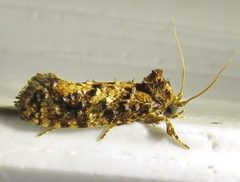
Acrolophus cressoni, known as Cresson's Grass Tubeworm Moth, is a small in the Acrolophidae. It occurs across the southern United States from the Southeast to the Southwest. The has a wingspan of approximately 19 mm. Larvae construct silken tubes at grass bases or roots for concealment while feeding, a trait characteristic of the .
Pronunciation
How to pronounce Acrolophus cressoni: /əˈkrɒləfəs ˈkrɛsənɪ/
These audio files are automatically generated. While they are not always 100% accurate, they are a good starting point.
Identification
Distinguished from other small by association with grassland and the -level trait of larval tube construction. Specific distinguishing features from congeneric not documented. Formerly classified in Tineidae, now placed in Acrolophidae.
Images
Appearance
Small with wingspan approximately 19 mm. Specific coloration and pattern details not documented in available sources.
Habitat
Grassland and prairie environments. Associated with grasses as larval plants.
Distribution
North America: southeastern and south-central United States. Documented from Alabama, Arizona, Arkansas, Florida, Georgia, Kentucky, Louisiana, Mississippi, New Mexico, North Carolina, Oklahoma, Tennessee, and Texas.
Diet
Larvae feed on grasses. Specific grass not documented for this species.
Host Associations
- grasses - larval food plantgeneral association; specific unknown
Life Cycle
Complete . Larvae spin silken tubes at the base of grasses or at grass roots for concealment while feeding. occurs within the tube or in soil.
Behavior
are and attracted to light. Larvae are concealed feeders within silken tubes.
Ecological Role
Herbivore in grassland . Larvae contribute to nutrient cycling through grass consumption and may serve as prey for and .
Similar Taxa
- Acrolophus popeanellaCongeneric grass tubeworm moth with similar and ; distinguished by distribution and subtle morphological differences
- Other Acrolophus speciesShare grass tube larval ; -level identification requires detailed examination
More Details
Taxonomic History
Formerly placed in Tineidae (clothes moths), now classified in family Acrolophidae based on revised phylogenetic understanding