
Hypsopygia nostralis
(Guenée, 1854)
southern hayworm moth, southern hayworm
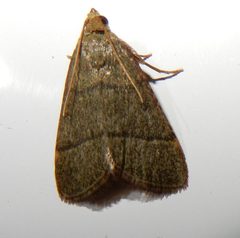
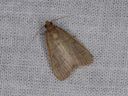
Hypsopygia nostralis, the southern hayworm , is a snout moth described by Achille Guenée in 1854. It is notable for its exceptionally wide distribution spanning multiple continents and oceanic islands. The species belongs to the Pyralidae, a large group of small to medium-sized moths often characterized by their elongated labial palps that form a snout-like projection.
Pronunciation
How to pronounce Hypsopygia nostralis: /hɪpˈsɒpɪdʒiə nɒˈstrɑːlɪs/
These audio files are automatically generated. While they are not always 100% accurate, they are a good starting point.
Images
Distribution
Found in most of South America, Saint Helena, Réunion, Mauritius, Madagascar, Puerto Rico, and the southern United States from Texas to Florida. GBIF records additionally confirm presence in the Democratic Republic of the Congo (Equateur and Katanga provinces) and the Maldives (Laamu and Meemu Atolls).
More Details
Taxonomic placement
The Hypsopygia has undergone taxonomic revision. Some formerly placed in the genus Dolichomia have been reassigned to Hypsopygia, though H. nostralis has consistently remained in Hypsopygia. The Pyralidae is sometimes referred to as snout moths due to the prominent labial palps characteristic of many species.