
Caudellia nigrella
Hulst, 1890
snout moth
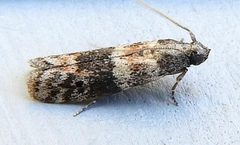
Caudellia nigrella is a of snout moth in the Pyralidae, described by George Duryea Hulst in 1890. It is one of approximately 1,500 species in the Phycitinae, a diverse group of small often associated with dried plant materials. The species occurs in western North America, with records from the southwestern United States and extending northward into Canada.
Pronunciation
How to pronounce Caudellia nigrella: //kɔːˈdɛliə nɪˈɡrɛlə//
These audio files are automatically generated. While they are not always 100% accurate, they are a good starting point.
Identification
As a member of Phycitinae, Caudellia nigrella can be distinguished from other pyralid by genitalic characters visible under magnification. -level identification within Caudellia requires examination of male genitalia, as external is often insufficient for distinguishing closely related phycitine . The is characterized by specific structural features of the male genitalia including the shape of the valvae and .
Images
Distribution
North America from northern Mexico through the southwestern United States (Texas, Arizona, Nevada, California) to Alberta, Canada. Records indicate presence in arid and semi-arid regions of western North America.
Similar Taxa
- Other Caudellia speciesRequires genitalic dissection for reliable separation; external often similar
- Other Phycitinae generaMany small dark phycitine share general appearance; genitalic characters needed for definitive identification
More Details
Taxonomic History
Described by George Duryea Hulst in 1890, a prominent American entomologist who described numerous North American Lepidoptera in the late 19th century.
Identification Challenges
Like many microlepidoptera, this exemplifies the challenge of identifying small from external characters alone. Many phycitine species require dissection and microscopic examination of genitalia for confident identification.