
Clydonopteron sacculana
Bosc, 1800
Trumpet Vine Moth
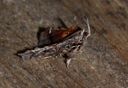
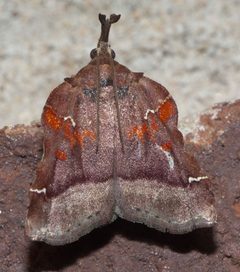
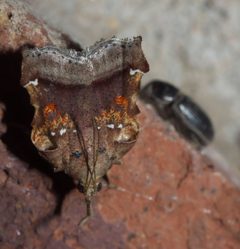
Clydonopteron sacculana is a small snout moth (Pyralidae) first described from the Americas in 1800. are active from May to August with a wingspan of 15–25 mm. The exhibits documented plant flexibility, with larvae feeding on Campsis radicans seed pods and, in North Carolina , internally on Pyrus calleryana fruit.
Pronunciation
How to pronounce Clydonopteron sacculana: /ˌklaɪdoʊˈnɒptərɒn ˌsækjəˈleɪnə/
These audio files are automatically generated. While they are not always 100% accurate, they are a good starting point.
Identification
Small size (15–25 mm wingspan) and May–August activity period help distinguish this . The snout moth Pyralidae can be recognized by elongated labial palps. Specific distinguishing features from are not documented in available sources.
Images
Appearance
Small with wingspan 15–25 mm. As a pyralid, possess elongated labial palps forming a snout-like projection. Wing pattern details are not explicitly documented in available sources.
Habitat
Associated with plant occurrences: areas supporting Campsis radicans (trumpet vine) and, in North Carolina, urban/suburban plantings of ornamental Pyrus calleryana (Callery pear).
Distribution
Native range includes West Indies, Brazil, and Argentina. In North America, occurs from Washington, DC to Florida, west to Missouri and Texas. Documented in North Carolina (Raleigh area) in association with Callery pear .
Seasonality
active from May to August. timing corresponds with plant fruit development.
Diet
Larvae are internal feeders in fruit: documented feeding on Campsis radicans seed pods and Pyrus calleryana fruit. feeding habits are not documented.
Host Associations
- Campsis radicans - larval larvae feed on seed pods
- Pyrus calleryana - larval larvae feed internally on fruit; documented in North Carolina
Life Cycle
Complete with , larval, pupal, and stages. Eggs deposited on developing fruit. Larvae bore into and develop inside fruit. occurs in soil. Adults emerge in spring (May–August).
Behavior
Larvae are internal fruit feeders, boring into developing fruit after hatch. Considered a potential pest of ornamental Callery pear due to fruit damage.
Ecological Role
Fruit-feeding herbivore; acts as a seed on Campsis radicans and damaging agent on cultivated Pyrus calleryana.
Human Relevance
Potential pest of ornamental Callery pear trees in urban and suburban landscapes. No other documented human interactions.
More Details
Host Plant Plasticity
This exhibits notable flexibility, with documented on Bignoniaceae (Campsis radicans) and Rosaceae (Pyrus calleryana). The North Carolina association with Callery pear represents a host shift or previously unrecorded utilization, as the 'trumpet vine ' reflects the original Campsis association.