
Arta olivalis
Grote, 1878
Olive Arta Moth
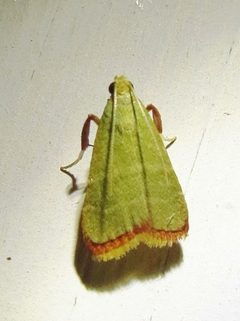
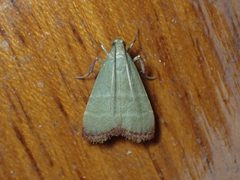
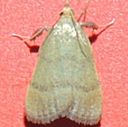
Arta olivalis, commonly known as the olive arta , is a small snout moth described by Augustus Radcliffe Grote in 1878. It belongs to the Pyralidae and is known from the southern United States. The species is characterized by its relatively small size, with a wingspan of approximately 14 mm.
Pronunciation
How to pronounce Arta olivalis: /ˈɑr.ta oʊˈlɪ.və.lɪs/
These audio files are automatically generated. While they are not always 100% accurate, they are a good starting point.
Identification
The small wingspan of approximately 14 mm distinguishes Arta olivalis from larger pyralid moths. Definitive identification requires examination of genitalia or detailed wing pattern analysis, as is typical for many small pyralid . The species can be separated from congeneric species through morphological examination, though specific diagnostic characters are not well documented in available literature.
Images
Habitat
Specific preferences are not documented, though the is known from the southern United States where it likely occurs in association with its larval plants.
Distribution
Known from the southern United States. Specific state records are not comprehensively documented in available sources.
Similar Taxa
- Other Arta speciesCongeneric within the Arta share similar small size and snout moth , requiring detailed examination for accurate identification.
- Small Pyralidae speciesMany small pyralid moths overlap in size and general appearance with Arta olivalis, necessitating careful morphological study for differentiation.
More Details
Taxonomic History
Described by Augustus Radcliffe Grote in 1878, a prominent 19th-century American entomologist known for his work on Lepidoptera.
Collection Records
The has 2,589 observations recorded on iNaturalist, indicating it is encountered with some frequency by observers in its range, though it remains poorly documented in formal scientific literature.
Sources and further reading
- BugGuide
- Wikipedia
- GBIF taxonomy match
- iNaturalist taxon
- NCBI Taxonomy
- Catalogue of Life
- Encyrtid Holdings | Entomology Research Museum
- Bug Eric: Remembering Moth Week 2025
- Three new species of ground snakes discovered under graveyards and churches in Ecuador
- Bug Eric: The Wasps and the Fly
- Entomological Vase Earns First Place in Art Show at 2022 Joint Annual Meeting
- economic pests | Beetles In The Bush