
Patania silicalis
(Guenée, 1854)
Herbivorous Patania Moth, Herbivorous Pleuroptya Moth
Patania silicalis is a small crambid with a wingspan of 24–26 mm, found across the Neotropics and into the eastern United States. First described by Guenée in 1854, it has undergone multiple generic reassignments and is also known under the synonym Pleuroptya silicalis. The is notable for its broad plant range, feeding on at least seven plant species across five .
Pronunciation
How to pronounce Patania silicalis: /pəˈteɪniə sɪlɪˈkælɪs/
These audio files are automatically generated. While they are not always 100% accurate, they are a good starting point.
Identification
The small size (24–26 mm wingspan) and summer period in North America may aid identification. Separation from other Patania requires examination of genitalia or detailed wing pattern analysis not provided in available sources.
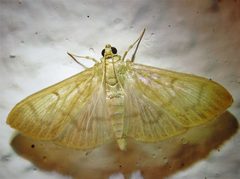
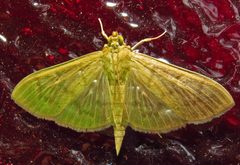
Images
Appearance
Small with wingspan of 24–26 mm. No detailed coloration or pattern description available in sources.
Habitat
No specific description available in sources. Presence across diverse geographic regions from tropical to temperate zones suggests broad habitat .
Distribution
Neotropical and Nearctic regions. Recorded from Brazil, Venezuela, Ecuador, French Guiana, Guyana, Guatemala, Rica, Panama, Mexico, Cuba, Jamaica, Puerto Rico, Hispaniola, and the United States (Missouri, Michigan, Ohio, New York south to Florida).
Seasonality
active in summer in North America. No information available for tropical .
Diet
Larvae feed on Polygonum, Ipomoea batatas (sweet potato), Ipomoea setifera, Merremia umbellata, Rivina humilis, Bougainvillea spectabilis, and Boehmeria nivea. feeding habits unknown.
Host Associations
- Polygonum - larval food plant level only, unspecified
- Ipomoea batatas - larval food plantsweet potato
- Ipomoea setifera - larval food plant
- Merremia umbellata - larval food plant
- Rivina humilis - larval food plantbloodberry
- Bougainvillea spectabilis - larval food plantornamental bougainvillea
- Boehmeria nivea - larval food plantramie
Human Relevance
Larval feeding on Ipomoea batatas (sweet potato) and Boehmeria nivea (ramie) indicates potential agricultural relevance, though economic impact has not been quantified in available sources.
Similar Taxa
- Other Patania speciesSimilar size and ; reliable identification requires examination
- Pleuroptya spp.Formerly classified in this ; closely related and morphologically similar
More Details
Taxonomic history
Originally described as Botys silicalis by Guenée in 1854. Transferred to Pleuroptya, then to Patania. Still listed as Pleuroptya silicalis in some databases (e.g., GBIF). The specific epithet 'silicalis' and 'herbivorous' reflect its plant-feeding habit, which is actually typical for the rather than distinctive.