
Lygropia tripunctata
Fabricius, 1794
sweetpotato leafroller
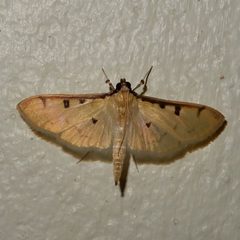
Lygropia tripunctata, commonly known as the sweetpotato leafroller, is a small crambid described by Fabricius in 1794. The is distributed across the southeastern United States, West Indies, Central America, and South America to Brazil. are active primarily from March to October. The larvae feed on several Convolvulaceae species including sweetpotato (Ipomoea), making this species of agricultural significance.
Pronunciation
How to pronounce Lygropia tripunctata: /laɪˈɡroʊpiə traɪpʊŋkˈteɪtə/
These audio files are automatically generated. While they are not always 100% accurate, they are a good starting point.
Identification
Distinguished from similar crambid by the combination of small size (~26 mm wingspan), grayish-brown coloration with light yellow wings, and the three conspicuous black dots along the back. The "tripunctata" (three-pointed) directly references this diagnostic spotting pattern.
Images
Distribution
Southeastern United States (Texas to South Carolina and Florida); West Indies; Central America; South America to Brazil.
Seasonality
most active March to October.
Diet
Larvae feed on Turbina corymbosa, Merremia umbellata, and Ipomoea (Convolvulaceae).
Host Associations
- Turbina corymbosa - larval
- Merremia umbellata - larval
- Ipomoea - larval includes sweetpotato
Human Relevance
Agricultural pest of sweetpotato (Ipomoea batatas) and related Convolvulaceae crops.
Similar Taxa
- Other Lygropia speciesSimilar size and general crambid ; distinguished by the three black dots and specific wing coloration of L. tripunctata
- Other small crambid moths in the regionRequire examination of spotting pattern and wing coloration; L. tripunctata is specifically identified by the three black dots referenced in its name