
Lygropia rivulalis
Hampson, 1898
Bog Lygropia Moth
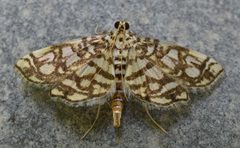
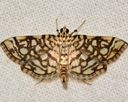
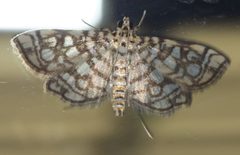
Lygropia rivulalis, commonly known as the bog lygropia , is a small crambid moth native to North America. It is strongly associated with wetland , particularly bogs and wet meadows. The has a broad geographic distribution across eastern and central North America, with a wingspan of approximately 17 mm. are active from spring through autumn.
Pronunciation
How to pronounce Lygropia rivulalis: /lɨˈɡroʊpiə rɪvjuˈleɪlɪs/
These audio files are automatically generated. While they are not always 100% accurate, they are a good starting point.
Identification
The bog lygropia can be distinguished from similar crambid moths by its consistent association with boggy and wet . Its small size (17 mm wingspan) and broad distribution across eastern and central North America may help separate it from more geographically restricted . Detailed diagnostic features for field identification are not well documented.
Images
Appearance
Small with a wingspan of approximately 17 mm. Specific wing pattern details are not well documented in available sources.
Habitat
Boggy or wet areas, including wetlands, marshes, and moist meadows. The shows a strong ecological affinity for saturated soils and standing water conditions.
Distribution
North America: recorded from Arizona, California, Illinois, Indiana, Iowa, Kentucky, Maine, Maryland, Massachusetts, Michigan, Minnesota, New Hampshire, New Jersey, New York, North Carolina, North Dakota, Ohio, Oklahoma, Ontario, Pennsylvania, Quebec, South Carolina, Tennessee, Vermont, West Virginia, and Wisconsin.
Seasonality
are on wing from April to October, indicating a multi-month period spanning spring through autumn.
Similar Taxa
- Other Lygropia species in the Lygropia may overlap in distribution and appearance; specificity and geographic range may help distinguish L. rivulalis.
- Other small CrambidaeMany small crambid share similar size and general ; detailed genitalia examination or molecular analysis may be required for definitive identification.
More Details
Taxonomic authority
First described by Hampson in 1898.
Observation frequency
The has been documented in at least 2,918 observations on iNaturalist, indicating it is relatively well-recorded by citizen scientists.