
Paracorsia
Marion, 1959
Species Guides
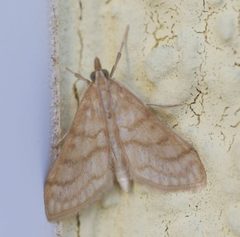
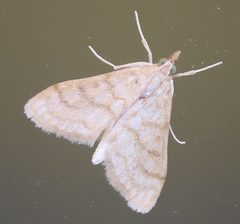
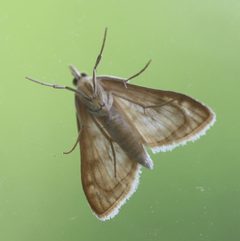
1- Paracorsia repandalis(Scarce Straw Pearl)
Paracorsia is a in the Crambidae, established by H. Marion in 1959. The genus contains a single , Paracorsia repandalis, originally described in 1775. The species is notable for its specialized larval association with Verbascum (mullein) plants.
Pronunciation
How to pronounce Paracorsia: /ˌpærəˈkɔːrsiə/
These audio files are automatically generated. While they are not always 100% accurate, they are a good starting point.
Identification
The is represented solely by Paracorsia repandalis, which has a wingspan of 24–28 mm. can be recognized by their distinctive wing pattern and size range. Specific diagnostic features for the genus itself are not separable from those of its single .
Images
Habitat
include areas where plants of the Verbascum grow, suggesting open, disturbed, or environments. The has been recorded in both European and central Asian localities with suitable host plant availability.
Distribution
Recorded from most of Europe except Ireland, Fennoscandia, and the Baltic region. Also found in central Asia (Iran, Kyrgyzstan) and North America (southern Ontario, northern Indiana).
Seasonality
are active from April to October, with two per year.
Diet
Larvae feed exclusively on Verbascum , including Verbascum lychnitis, Verbascum thapsus, and Verbascum phlomoides.
Host Associations
- Verbascum lychnitis - larval food plant
- Verbascum thapsus - larval food plant
- Verbascum phlomoides - larval food plant
Life Cycle
Larvae feed on plants, then hibernate in a case. occurs in early spring following hibernation. emerge in two annually.
More Details
Taxonomic history
The was erected by H. Marion in 1959 to accommodate Paracorsia repandalis, which had previously been described under different generic placements. The status has remained stable.