
Neohelvibotys
Munroe, 1976
Species Guides
3- Neohelvibotys arizonensis
- Neohelvibotys neohelvialis(Common Caramel Moth)
- Neohelvibotys polingi
Neohelvibotys is a of in the Crambidae, established by Munroe in 1976. It contains at least eight described distributed in the Americas, ranging from the southwestern United States through Mexico to South America. The genus belongs to the Pyraustinae, a diverse group of grass moths and related lineages. Species in this genus are generally small to medium-sized moths with relatively inconspicuous coloration.

Pronunciation
How to pronounce Neohelvibotys: /ˌniː.oʊˌhɛl.vɪˈboʊ.tɪs/
These audio files are automatically generated. While they are not always 100% accurate, they are a good starting point.
Identification
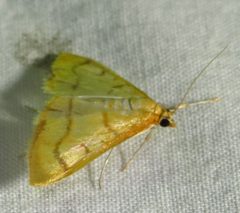
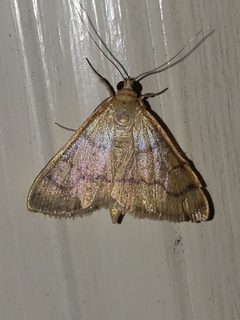
Members of Neohelvibotys can be distinguished from related by genitalic characters, particularly in the male valvae and female ostium, though specific diagnostic features require microscopic examination. The genus name refers to a resemblance to Helvibotys, from which it was separated. External is generally nondescript, with typically showing muted brown or grayish forewings with subtle pattern elements. Accurate identification to species level usually requires dissection and comparison with .
Images
Distribution
The occurs in the Nearctic and Neotropical regions. Documented range from Arizona and New Mexico in the southwestern United States, through Mexico (Nayarit), to Bolivia, Argentina, and southern Brazil (Rio Grande do Sul).
Similar Taxa
- HelvibotysNeohelvibotys was separated from Helvibotys based on genitalic differences; the two share similar external appearance and were historically confused.
- Other Pyraustinae generaMany small crambid in the Pyraustinae share general with Neohelvibotys, requiring genitalic examination for reliable distinction.
More Details
Etymology
The prefix 'neo-' (new) combined with 'helvibotys' indicates the 's close relationship to and separation from Helvibotys.
Type species
Neohelvibotys neohelvialis (Capps, 1967) was designated as the type when the was established.