
Procymbopteryx
Munroe, 1961
Species Guides
1Procymbopteryx is a in the Crambidae, containing only the P. belialis. The genus was established by Eugene G. Munroe in 1961. The sole species was originally described by Herbert Druce in 1899. It is known from limited localities in the southwestern United States and Mexico.
Pronunciation
How to pronounce Procymbopteryx: //pɹoʊˌsɪmbɒpˈtɛɹɪks//
These audio files are automatically generated. While they are not always 100% accurate, they are a good starting point.
Identification
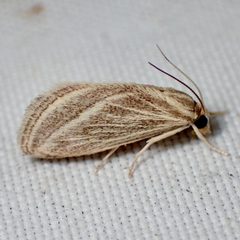
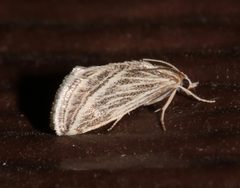
The combination of small size (17 mm wingspan), dark grayish brown forewings with contrasting yellowish white marginal edging, and grayish white hindwings with darkened outer margins distinguishes P. belialis from other small crambid in its range. The status of the means any specimen matching this description and collected within the known range can be confidently assigned to this genus.
Images
Appearance
The single described , Procymbopteryx belialis, has a wingspan of approximately 17 mm. Forewings are dark grayish brown with yellowish white edging along the and both margins. Hindwings are grayish white, darkening toward the outer margin.
Distribution
Known from the Mexican state of Guerrero and the US state of Arizona. The disjunct distribution suggests possible under-sampling or specific requirements that may occur in intervening regions.
Seasonality
have been recorded on wing from July to August, indicating a summer period.
Similar Taxa
- Other Odontiinae generaMany small crambid share similar size and general appearance; precise wing pattern details (yellowish white marginal edging on dark forewings) and geographic provenance are required for separation
More Details
Taxonomic history
The was erected by Eugene G. Munroe in 1961, with the originally described by Herbert Druce in 1899 under a different genus. The status has remained unchanged since establishment.
Collection rarity
With only 51 observations recorded on iNaturalist and documentation from just two political divisions, this appears genuinely rare or under-collected, rather than simply overlooked due to small size.