Abegesta reluctalis
Hulst, 1886
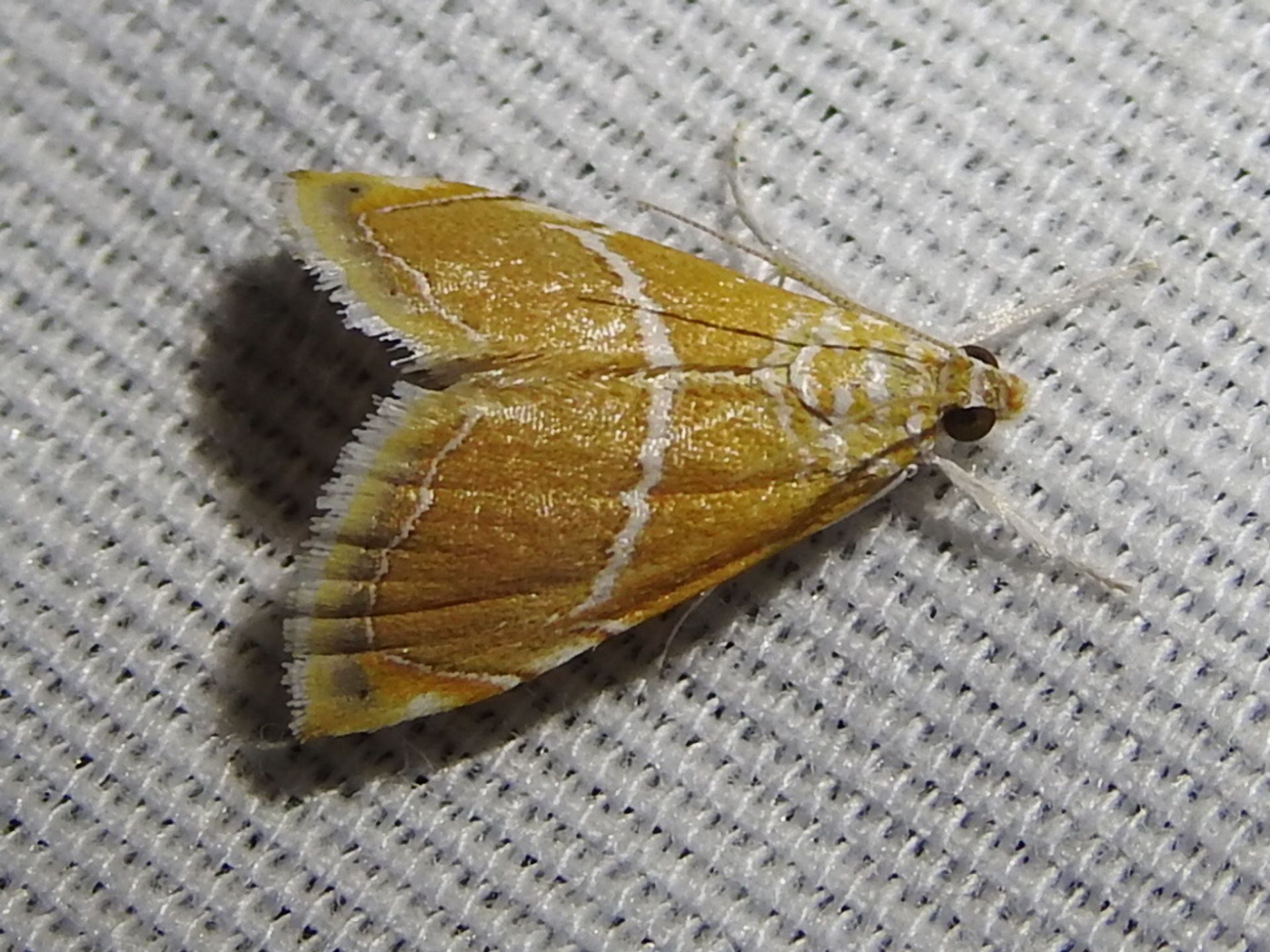
A small crambid with distinctive golden forewings marked by two white transverse lines. are active from early summer through early autumn. The is known from scattered localities across the southwestern and eastern United States.
Pronunciation
How to pronounce Abegesta reluctalis: /ˌæbɪˈɡɛstə rɪˌlʌktəˈlɪs/
These audio files are automatically generated. While they are not always 100% accurate, they are a good starting point.
Identification
The combination of small size, golden forewings with paired white lines, and white hindwings with basal ochreous wash distinguishes this from most sympatric crambids. The specific pattern of white lines on the forewing should be compared against other Abegesta species and similar Odontiinae.
Images
Appearance
Wingspan approximately 15–16 mm. Forewings golden with brownish suffusion and two white transverse lines. Hindwings predominantly white, washed with fuscous ochreous at the base. Body proportions typical of small crambid .
Distribution
Recorded from Arizona, California, Maryland, and New Mexico. The disjunct distribution pattern suggests either incomplete sampling or genuine range fragmentation.
Seasonality
recorded on wing from June through September, indicating a single extended period during summer months.
Similar Taxa
- Other Abegesta speciesShare -level wing patterns and size range; require examination of genitalia or precise wing markings for separation
- Odontiinae (general)Similar small size and wing shape; white line patterns on forewing are diagnostic for -level assignment
More Details
Nomenclatural note
Originally described as Orobena reluctalis Hulst, 1886; later transferred to Abegesta. The basionym is recorded in NCBI .
Data limitations
Despite being described in 1886, published information on larval , plants, and complete remains unavailable in accessible sources.