
Xubida punctilineella
Barnes & McDunnough, 1913
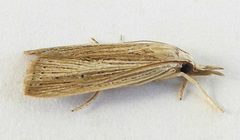
Xubida punctilineella is a crambid described by Barnes and McDunnough in 1913. The is known from very few observations, with records limited to Florida in North America. Like other members of the Xubida, it is a small moth, but specific details about its remain poorly documented due to its rarity in collections and limited study.
Pronunciation
How to pronounce Xubida punctilineella: //zuːˈbiː.də ˌpʌŋk.tɪ.lɪˈnɛl.ə//
These audio files are automatically generated. While they are not always 100% accurate, they are a good starting point.
Identification
Xubida punctilineella can be distinguished from by its specific wing pattern featuring punctate (dotted) linear markings, as suggested by the epithet 'punctilineella' (meaning 'dotted with small lines'). The original description by Barnes and McDunnough (1913) provides the definitive diagnostic characters. Comparison with similar Xubida species requires examination of genitalia and wing pattern details.
Images
Distribution
Recorded from Florida, United States. The appears to have a restricted range, though limited sampling may contribute to its apparent rarity.
Similar Taxa
- Xubida panopeAnother North American Xubida ; requires careful examination of wing pattern and genitalia to distinguish
- Xubida bicoloralisSimilar size and general appearance; specific wing markings and genital separate the
More Details
Taxonomic history
The was established by Barnes and McDunnough in their 1913 work 'New species of Lepidoptera from the United States' published in the Proceedings of the Entomological Society of Washington. The type locality is in Florida.
Data deficiency
With only five observations in iNaturalist and limited museum records, Xubida punctilineella is among the more poorly known North American crambid . This data deficiency limits understanding of its true distribution, preferences, and conservation status.