
Pediasia trisecta
Walker, 1856
large sod webworm, greater sod webworm, Sod Webworm Moth
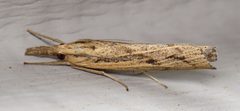
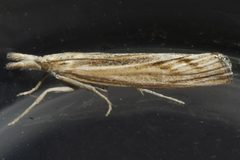
Pediasia trisecta is a crambid known as the large sod webworm or greater sod webworm. The occurs across the United States and southern Canada, with active from late spring through autumn. Larvae feed on grasses in the Poaceae, while adults consume only dew.
Pronunciation
How to pronounce Pediasia trisecta: //pɛdɪˈeɪʒə ˈtraɪsɛktə//
These audio files are automatically generated. While they are not always 100% accurate, they are a good starting point.
Identification
Distinguished from other sod webworms by larger size; P. trisecta has a wingspan of 23–33 mm compared to smaller . May require genitalia examination or larval characteristics for definitive separation from similar Pediasia .
Images
Habitat
Grass-dominated environments including lawns, meadows, pastures, and other areas supporting Poaceae vegetation. Larvae inhabit soil and thatch layers associated with grass root systems.
Distribution
United States and southern Canada. Documented from Alberta, Manitoba, and Saskatchewan in Canada; Vermont and presumably other US states.
Seasonality
active from May to October. Multivoltine with extended period spanning late spring through autumn.
Diet
Larvae feed on various Poaceae (grass) . feed solely on dew.
Host Associations
- Poaceae - larval food plantvarious grass
Life Cycle
Complete with larval stage feeding on grass roots and thatch. Specific details on , pupal, and stages not documented in sources.
Behavior
are and have been observed feeding on dew. Larvae construct silk-lined burrows in soil and thatch, typical of sod webworm .
Ecological Role
Larvae function as herbivores in grassland . In high densities, may contribute to nutrient cycling through thatch decomposition and grass root pruning.
Human Relevance
Larvae are considered turfgrass pests, potentially damaging lawns, golf courses, and pastures through root feeding. "sod webworm" reflects economic significance in horticulture and agriculture.
Similar Taxa
- Other Pediasia speciesCongeneric sod webworms overlap in distribution and ; P. trisecta distinguished by larger size (23–33 mm wingspan)
- Other Crambinae sod webwormsShare grass-feeding larval habits and similar ; require detailed examination for separation
More Details
Taxonomic note
Placed in Crambinae, a group commonly referred to as grass moths or sod webworms due to larval habits.